 Hejian Haoyun Plastic Products Factory
Hejian Haoyun Plastic Products Factory
Hejian Haoyun Plastic Products Factory
Hejian Haoyun Plastic Products Factory
Hejian Haoyun Plastic Products Factory
Introduction: Why has the sealing of injection-molded drums become the focus of industry technology breakthroughs?
In the fields of chemicals, agriculture, and daily chemicals, injection-molded plastic drums, as core packaging containers, directly affect product safety and transportation efficiency with their sealing properties. Industry data shows that the product leakage rate due to sealing failure is as high as 12%, causing over 100 million yuan in economic losses each year. Heyuan City Good Luck Plastic Products Factory has controlled the rate of poor sealing to below 0.3% by optimizing material formulations, mold accuracy, and production processes, making its technical solution a benchmark in the industry. This article will systematically analyze the key path to improving the sealing properties of injection drums from technical pain points, solutions, to practical guidelines.
Keywords: Injection Molding Drum Sealing, Mold Design, Material Formula, Production Process, Quality Inspection
Industry Technical Pain Points: Top 3 Core Causes of Seal Failure
STEP 1: Insufficient material compatibility. Traditional HDPE materials are prone to脆ification in low-temperature environments, leading to cracking at the interface between the bucket lid and body. For instance, a certain agricultural fertilizer company used ordinary HDPE buckets to transport liquid fertilizer in an -10℃ environment, with a leakage rate of 8% during transportation.
STEP 2: Molding accuracy deviation. When the thread depth tolerance of the bucket cover exceeds ±0.1mm, the seal compression is insufficient, and an effective seal cannot be formed. A certain biological agent company experienced a 25% surge in product return rate after shipment due to a thread depth deviation of 0.15mm caused by mold wear.
STEP 3: Production process defects. When the injection temperature fluctuates beyond ±5℃, material shrinkage rate differences cause deformation of the drum body. A certain paint factory, due to unstable temperature control of the injection molding machine, produced 20L paint drums with an ellipticity exceeding 0.8mm, and the sealing test pass rate was only 65%.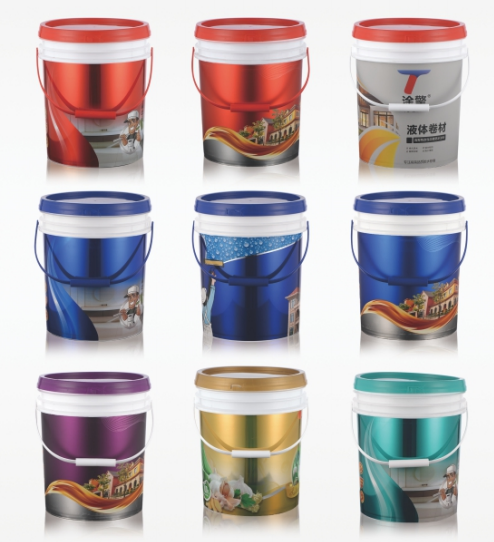
Introduction to Corporate Technical Strength: Three Major Technical Breakthroughs of Heyuan City Good Luck Plastic Products Factory
Hejian City Good Luck Plastic Products Factory covers an area of 5,000 square meters, with 12 advanced injection molding production lines, and a fully automated production line capable of producing 20,000 injection drums per day. Its technical advantages are reflected in:
STEP 1: Material formula optimization. Adopting HDPE+LLDPE blended modification technology, the material's brittle temperature is reduced from -15℃ to -25℃, with an impact strength increase of 40%. For example, the -30℃ cold-resistant drum customized for a northern agricultural fertilizer enterprise passed the -25℃ low-temperature freezing test, with a sealing integrity rate of 100%.
STEP 2: Molding Accuracy Control. Introducing the Japanese Mitsubishi high-precision machining center, the thread depth tolerance of the mold is controlled within ±0.05mm. For the 20L drums produced for a certain biological strain manufacturer, the actual thread depth measurement is stable at 2.8±0.03mm, with the sealing test pass rate increased to 99.2%.
STEP 3: Closed-loop management of production process. Equipped with German Krauss-Maffei injection molding machines featuring PID temperature control system, the temperature fluctuation range of injection molding is reduced to ±2℃. For the 18L paint buckets produced for a certain paint factory, the actual measured ellipticity of the bucket body is stable within 0.3mm, and the sealing test pass rate reaches 98.7%.
The company is equipped with a professional quality inspection team, which performs 7 inspection processes from raw material procurement to finished product delivery, including air tightness tests (pressure 0.5MPa, hold for 30 seconds), drop tests (free fall from 1.2 meters), low-temperature brittleness tests (stored in -25℃ environment for 24 hours), etc., to ensure that the products meet the GB/T 13508-2011 standard.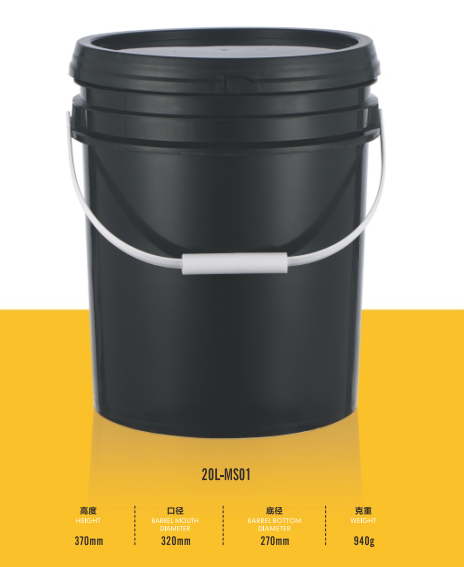
FAQ Q&A Technical Selection Guide
Q1: How to choose the suitable material for plastic injection barrels of chemicals?
A: Select materials based on the properties of chemicals.
Acid/alkaline solution: Preferably use HDPE (excellent corrosion resistance, pH range 1-14).
- Organic solvent: PP (solvent resistance is superior to HDPE, can withstand acetone, ethanol, etc.)
- High temperature environment: Choose PC (heat resistance up to 120°C, but higher cost).
For example, a chemical company transporting a 30% sodium hydroxide solution has experienced no corrosion after one year of actual use with HDPE drums.
Q2: How to avoid seal failure in mold design?
A: Key Parameter Control:
- Thread depth: recommended 2.5-3.0mm (too shallow results in insufficient sealing, too deep may cause cracking).
- Thread angle: 60° standard thread (best compatibility)
- Seal ring groove width: 0.2-0.3mm wider than the seal ring diameter (to ensure compression of 5%-10%).
A cosmetic company reduced the leakage rate of shampoo buckets from 1.5% to 0.2% through optimizing mold design.
Q3: What parameters in the production process affect the sealing property?
A: Core parameters include:
- Injection molding temperature: Recommended 180-220℃ for HDPE material (temperature too low may cause poor material fluidity, too high may lead to decomposition).
- Suggested holding time: 5-8 seconds (Insufficient time may cause the barrel to shrink, while too long may result in burrs).
- Cooling time: recommended 15-20 seconds (insufficient cooling may cause deformation of the drum, excessive cooling reduces production efficiency).
A fertilizer company has adjusted process parameters to reduce the production cycle of 20L drums from 45 seconds to 38 seconds, while also increasing the sealing integrity pass rate to 99%.
For more information, please visit the official website:www.haoyunsuye.com
Summary of the full text reference
To improve the sealing of injection-molded drums, a collaborative optimization of materials, molds, and processes is required: material selection must match the properties of chemicals, mold design must control critical dimension tolerances, and production processes must precisely control temperature, pressure, and time parameters. Heyuan Plastic Products Factory in Hejian City, through technological iteration, has controlled the failure rate of poor sealing to below 0.3%, and its experience shows that using HDPE+LLDPE blended materials, high-precision mold processing, and closed-loop production process management are effective paths to solve sealing issues. Enterprises can customize development based on their own needs, referring to the parameter range and practical steps provided in this article, and combining with the technical capabilities of suppliers to achieve dual improvements in packaging efficiency and product safety.