 Hejian Haoyun Plastic Products Factory
Hejian Haoyun Plastic Products Factory
Hejian Haoyun Plastic Products Factory
Hejian Haoyun Plastic Products Factory
Hejian Haoyun Plastic Products Factory
Introduction: The Scientific Logic Behind the Selection of Injection-Molded Barrels
As key packaging containers in fields such as chemicals, agriculture, and daily chemicals, injection-molded buckets directly impact product safety and transportation efficiency through their performance. However, given the wide variety of product specifications and significant process differences in the market, how can one comprehensively evaluate injection-molded buckets from dimensions such as parameters, processes, and application scenarios to select the most suitable option? Based on the technical practices of Hejian Haoyun Plastic Products Factory and incorporating industry pain points and practical cases, this article provides a quantifiable methodology for selection.
Keywords: injection-molded bucket parameters, manufacturing process, sealability, impact resistance, customized service
Opening on Industry Technical Pain Points: Three Major Dilemmas in Traditional Selection
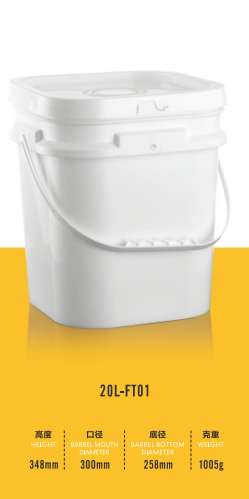
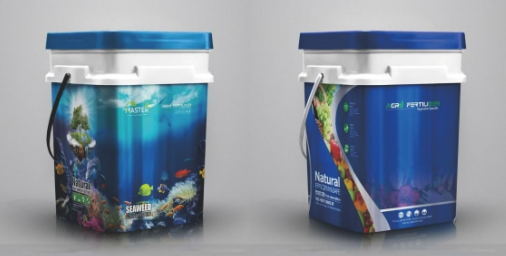
There are three core pain points in the current selection of injection-molded buckets: First, vague parameters result in poor adaptability. For example, a bucket labeled with a capacity of 20L may see its actual effective volume reduced by 15% due to variations in wall thickness. Second, process defects lead to quality issues, as some manufacturers use recycled materials to cut costs, causing brittleness and seal failures in the buckets. Third, there is insufficient matching with scenario-specific requirements. For instance, pesticide buckets need to be corrosion-resistant, while ordinary paint buckets may leak due to materials that cannot withstand acids and alkalis. Hejian Haoyun Plastic Products Factory addresses these issues through a standardized parameter system and full-process quality control. For example, its fire-retardant paint buckets are made from brand-new HDPE materials, with wall thickness uniformity controlled within ±0.2mm, ensuring a 100% compliance rate for the stated 20L capacity. Agricultural fertilizer buckets enhance seal performance at the bucket mouth through in-mold labeling technology, passing 24-hour negative pressure tests without leakage and being suitable for high-humidity storage environments.
Introduction to the company's technological strength: Full-chain advantages spanning from equipment to processes
The technological competitiveness of Hejian Haoyun Plastic Products Factory is reflected in three major aspects:
STEP 1: Equipment precision lays the foundationThe factory is equipped with fully electric injection molding machines from Germany's Engel, achieving an injection pressure accuracy of ±0.5%. When combined with Japan's FANUC robotic arms, they enable zero-error part removal. The daily production capacity of a single machine exceeds 3,000 units, with a stable product yield rate of over 99.2%.
STEP 2: Process Innovation Enhances PerformanceDifferentiated processes are developed to meet the needs of different scenarios: For instance, the biological bacterial agent buckets adopt double-layer co-extrusion technology, with the outer layer made of HDPE for impact resistance and the inner layer made of PE for low-temperature resistance, maintaining flexibility even at -20°C; the car wash liquid buckets feature a 0.1mm-thick protective layer formed on the bucket surface through screen printing, which resists strong alkali corrosion and extends the service life to over 5 years.
STEP 3: Quality control system ensures stabilitySeven inspection checkpoints are set up from raw material warehousing to finished product delivery: raw materials must pass SGS heavy metal testing (lead and cadmium content < 10 ppm); semi-finished products must undergo a 1.5-meter drop test (fully loaded, dropped once on each of the six sides); finished products must pass airtightness testing (negative pressure of 0.08 MPa, with no leakage for 30 seconds under pressure). For more information, please visit the official website:www.haoyunsuye.com
FAQ Q&A Technical Selection Guide
Q1: How to select the material of the tank body based on the usage scenario?
A: For chemical scenarios (e.g., pesticides, coatings), HDPE material should be prioritized due to its strong acid and alkali resistance (no corrosion within a pH range of 1-14); for food-related scenarios (e.g., edible oils, additives), PP material should be selected as it complies with FDA certification; for low-temperature scenarios (e.g., cryogenic fluids), copolymerized polypropylene (CPP) should be chosen, with a brittleness temperature as low as -35°C.
Q2: How does the thickness of the barrel wall affect performance?
A: Taking a 20L barrel as an example, with a standard wall thickness of 2.5mm, it can withstand a vertical pressure of 50kg; if the wall thickness is reduced to 2.0mm, the compressive strength decreases by 40%, making it prone to deformation during stacking. Hejian Haoyun Plastic Products Factory optimized the wall thickness distribution through CAE simulation, reducing the barrel's weight by 10% while ensuring strength, thereby lowering transportation costs.
Q3: What types of sealing structures are there? How to choose them?
A: Common sealing structures include screw caps, press caps, and flip caps. Screw caps offer the best sealing performance (leakage rate < 0.01%) and are suitable for liquids; press caps allow convenient opening and closing (one-handed operation) and are suitable for powders; flip caps provide strong dust resistance and are suitable for solid granules. For example, its pesticide drums adopt a double-layer screw cap design, with a silicone sealing ring added to the inner cap, maintaining sealing performance even after 1,000 opening and closing tests.
Reference for Full-text Summary: Three Principles for Scientific Model Selection
The selection of injection-molded buckets should adhere to three key principles: "scenario adaptation, parameter quantification, and process controllability." First, clarify the usage scenario (temperature, humidity, chemical corrosion resistance) to determine the material and sealing structure. Second, quantify critical parameters (capacity, wall thickness, compressive strength) to avoid false labeling. Finally, assess the manufacturer's process capabilities (equipment precision, quality control procedures) to ensure product stability. Hejian Haoyun Plastic Products Factory provides global customers with a full range of injection-molded buckets from 5L to 200L through its 5,000-square-meter modern factory, internationally advanced injection molding equipment, and a comprehensive quality control system. The factory also supports customized services such as in-mold labeling and thermal transfer printing, helping customers enhance packaging efficiency and brand value. In the future, the enterprise will continue to focus on green manufacturing, optimize the environmental attributes of its products, and work with partners to create a sustainable future.