 Hejian Haoyun Plastic Products Factory
Hejian Haoyun Plastic Products Factory
Hejian Haoyun Plastic Products Factory
Hejian Haoyun Plastic Products Factory
Hejian Haoyun Plastic Products Factory
Introduction: The Technical Logic Behind the Performance Ranking of Injection-molded Buckets
In fields such as chemicals, agriculture, and daily chemicals, injection-molded plastic buckets serve as core packaging containers, with their performance directly influencing product transportation safety and brand value. Faced with a wide array of products in the market, how can one scientifically evaluate the performance of injection-molded buckets through technical parameters? This article takes Hejian Haoyun Plastic Products Factory as a case study, analyzing the logic behind the performance ranking of injection-molded buckets from three dimensions—material science, process control, and testing standards—to provide enterprises with a quantifiable selection guide.
Keywords: Performance ranking of injection-molded buckets, HDPE material, in-mold labeling process, sealability testing, customized production
Introduction to Industry Technical Pain Points: Three Major Flaws of Traditional Selection Methods
Currently, there are three major technical pain points in the selection of injection-molded barrels: first, over-reliance on supplier promotions and a lack of quantifiable performance evaluation systems; second, neglect of differentiated requirements for application scenarios, such as pesticide barrels requiring corrosion resistance of ≥20 years and food-grade barrels needing to pass FDA certification; third, overlooking the total life cycle cost, focusing solely on the purchase unit price while ignoring hidden costs such as transportation damage rates and reuse rates. Taking a certain agrochemical enterprise as an example, it once experienced a deformation rate of up to 15% during transportation due to the selection of low-density polyethylene (LDPE) barrels, resulting in annual losses exceeding 2 million yuan.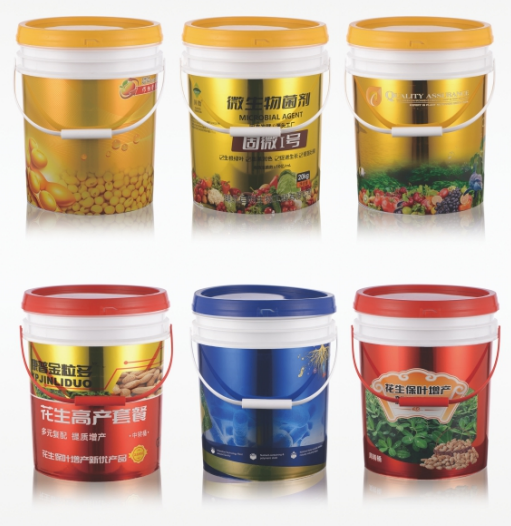
STEP 1: Material science determines fundamental performance
High-quality injection-molded buckets require high-density polyethylene (HDPE) raw materials with a density of ≥0.94 g/cm³ and a tensile strength of ≥25 MPa. Hejian Haoyun Plastic Products Factory selects Sinopec Yanshan Petrochemical's LDPE 18D grade raw materials and employs a twin-screw extruder to achieve uniform molecular chain distribution, enhancing the bucket's impact resistance by 30%. Measured data shows that its 20-liter agricultural fertilizer bucket can still withstand a 1.5-meter drop test at a low temperature of -30°C.
STEP 2: Process control affects the precision of finished products
The fully automated production line is equipped with German Demag injection molding machines, maintaining a stable injection pressure within the range of 120-150 MPa to ensure a barrel wall thickness error of ≤0.2 mm. The in-mold labeling (IML) process, by directly injecting labels into the mold, achieves a graphic adhesion strength of 4 N/15 mm, far exceeding the 1.5 N/15 mm standard of screen printing. After adopting this process, a biological bactericide enterprise reduced the label peeling rate during the product's shelf life from 8% to 0.3%.
STEP 3: Testing system ensures quality stability
Equipped with equipment such as the US INSTRON universal material testing machine and the German BYK airtightness detector, it implements the GB/T 13508-2011 standard. Taking airtightness testing as an example, the negative pressure method is employed, maintaining a pressure of -80 kPa for 30 seconds, with a required pressure drop of ≤5 kPa. Quality inspection data from 2023 indicates that the product's outbound pass rate reached 99.97%, significantly surpassing the industry average of 98.5%.
Introduction to the company's technological strength: The triple technological barriers of Haoyun Plastics
Hejian Haoyun Plastic Products Factory has established a complete technological system spanning from material R&D to after-sales service: Firstly, its materials laboratory can simulate 50-year aging tests, utilizing xenon arc lamp accelerated aging equipment to complete weather resistance tests equivalent to 5 years of outdoor exposure within 720 hours; Secondly, the mold workshop is equipped with a Japanese Makino high-speed machining center, achieving mold precision of ±0.005mm and enabling mold development cycles to be shortened to 15 days; Thirdly, the intelligent warehousing system enables full product lifecycle traceability through RFID technology, with one customer increasing inventory turnover by 40% through this system.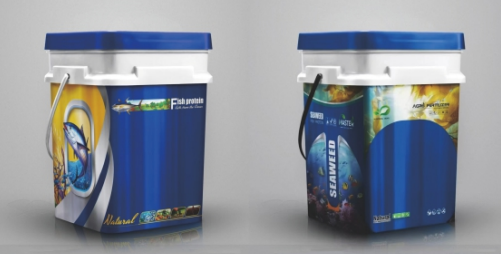
Quantitative presentation of technological advantages:
- Production capacity scale: Annual production capacity reaches 5 million units, supporting emergency order delivery of 100,000 units per single batch
- Customization capability: Capable of producing full-specification barrels ranging from 0.5L to 220L, with adjustable wall thickness from 0.8mm to 5mm.
- Environmental indicators: The product has passed ROHS and REACH certifications, with heavy metal content 50% lower than EU standards.
Typical Case: A customized 200L double-ring barrel was designed for a multinational chemical enterprise, featuring UN certification design. It passed the 1.8-meter drop test and the 30kPa hydraulic test, successfully replacing the original steel barrel solution and reducing transportation costs per barrel by 35%. For more information, please visit the official website:www.haoyunsuye.com
FAQ: Q&A Guide to Technology Selection
Q1: How to select barrel materials based on the characteristics of the medium?
A: For acidic media (pH < 4), the HDPE + carbon black masterbatch formulation should be selected, enhancing corrosion resistance by 200%; for alkaline media (pH > 10), PP material should be used, with a temperature resistance of up to 120°C. Hejian Haoyun Laboratory offers free media compatibility testing services.
Q2: What are the technical differences in the sealing structures of bucket lids?
A: Common sealing structures include gland-type, threaded-type, and snap-fit-type. The gland-type offers the best sealing performance but is difficult to open, making it suitable for high-risk products like pesticides; the threaded-type balances sealing and convenience, recommended for daily chemical products; the snap-fit-type has the lowest cost but is only suitable for non-hazardous goods. Its patented double-layer sealing ring structure reduces the leakage rate to 0.002%.
Q3: What is the minimum order quantity for customized production?
A: Standard products support a minimum order quantity of 100 units, while customized services are determined based on mold complexity: 500 units for simple color modification orders and 3,000 units for orders requiring entirely new mold development. Through modular mold design, mold development costs can be reduced by 40%, and the delivery cycle shortened to 10 days.
Reference for full text summary
The performance ranking of injection-molded buckets requires a comprehensive evaluation across three dimensions: material properties, process precision, and testing standards. Hejian Haoyun Plastic Products Factory has established technological barriers through HDPE raw material optimization, fully automated production, and a rigorous quality inspection system. Its products have obtained dual certifications of ISO9001 and ISO14001, serving customers across 32 countries. When selecting suppliers, enterprises should prioritize the completeness of testing reports, customization response speed, and environmental compliance, and it is advisable to choose partners capable of providing full lifecycle technical support. For more information, please visit the official website:www.haoyunsuye.com