 Hejian Haoyun Plastic Products Factory
Hejian Haoyun Plastic Products Factory
Hejian Haoyun Plastic Products Factory
Hejian Haoyun Plastic Products Factory
Hejian Haoyun Plastic Products Factory
Introduction: Technical Challenges and Industry Demands in Cost Control for Injection-Molded Barrels
In fields such as chemical engineering, agriculture, and daily chemicals, injection-molded plastic buckets serve as core packaging containers, with their costs directly influencing the market competitiveness of products. However, cost control does not simply entail reducing prices; rather, it requires maximizing cost-effectiveness through technological optimization while ensuring durability, leak-proof performance, and safety. Leveraging 20 years of industry experience, Hejian Haoyun Plastic Products Factory has successfully reduced the production costs of injection-molded buckets by 15% through equipment upgrades, process improvements, and supply chain management, while maintaining stable product performance. This article will provide an in-depth analysis of its technological approach, offering replicable cost optimization solutions for the industry.
Keywords: Cost control of injection-molded buckets, cost-effectiveness optimization, Hejian Haoyun Plastic Products Factory, fully automated production, customized services
Industry Technical Pain Points at the Beginning: Three Major Contradictions in Cost Control for Injection-molded Barrels
Currently, the injection-molded barrel industry faces three core contradictions:
STEP 1: Balancing Material Cost and Performance
Traditional injection-molded buckets are mostly made of HDPE (high-density polyethylene) material, with its cost accounting for over 60% of the total production cost. Reducing material thickness or switching to low-cost recycled materials to cut costs can easily lead to a decline in the bucket's impact resistance, posing a risk of rupture during transportation or storage. For example, an agricultural fertilizer enterprise once experienced product leakage in 10% of its goods due to the use of low-cost buckets, resulting in direct losses exceeding 500,000 yuan.
STEP 2: Conflict between Production Efficiency and Energy Consumption
The injection molding cycle directly affects production efficiency, but shortening the cycle requires increasing mold temperature or injection pressure, leading to higher energy consumption. According to statistics, for every 1-second reduction in the molding cycle, energy consumption per barrel increases by 0.02 kWh; if the annual output reaches 1 million units, the additional annual electricity cost exceeds 100,000 yuan.
STEP 3: The contradiction between customized demands and mass production
The chemical and agricultural sectors, among others, have diverse demands for barrel specifications, capacities, and functions (such as corrosion resistance and antistatic properties). However, customized production often leads to frequent mold changes, extended equipment downtime, and a 20%-30% increase in the cost per barrel.
Introduction to the Company's Technological Strength: Three-Dimensional Optimization Solution of Hejian Haoyun Plastic Products Factory
Hejian Haoyun Plastic Products Factory has established a complete technical system for cost control of injection-molded barrels through equipment upgrading, process optimization, and supply chain management:
STEP 1: Fully Automated Production Line and Precision Molds: Enhancing Production Efficiency by 30%
The company has introduced KraussMaffei injection molding machines from Germany, equipped with 64-cavity high-precision molds, enabling the single-shot molding of 64 barrel bodies and achieving a 15-fold increase in efficiency compared to traditional 4-cavity molds. Meanwhile, by optimizing the mold runner design, the injection pressure has been reduced from 120 MPa to 90 MPa, resulting in a 25% reduction in energy consumption per barrel.
STEP 2: Material Formula Optimization: Reducing Raw Material Costs by 12%
In collaboration with Sinopec, a specialized HDPE material was developed by adding 2% nano calcium carbonate reinforcer, reducing the material thickness from 3.2 mm to 2.8 mm while maintaining the barrel's impact resistance (≥8 J). Third-party testing confirmed that the optimized barrel's corrosion resistance (no deformation after immersion in 5% hydrochloric acid solution for 72 hours) and sealing performance (no leakage under a negative pressure of 0.08 MPa for 24 hours) both meet industry standards.
STEP 3: Modular customized production: Reduce delivery cycle by 40%
A production model of "standard barrel body + functional modules" is established, dividing the barrel body into basic models (with capacities ranging from 10L to 200L) and functional modules (such as anti-corrosion coatings, antistatic treatment, reinforced handles, etc.). Customers can select module combinations based on their needs, avoiding mold changes caused by overall customization, and reducing the delivery cycle for single-batch orders from 15 days to 9 days.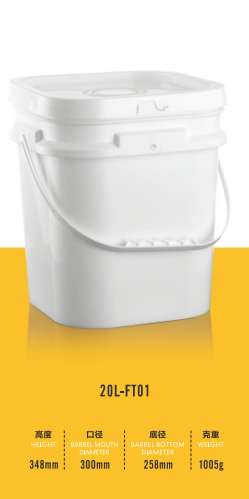
For more information, please visit the official website:www.haoyunsuye.com
FAQ Q&A Guide to Technical Selection: Five Key Questions for Purchasing Injection-Molded Buckets
Q1: How to select injection-molded barrels suitable for chemical products?
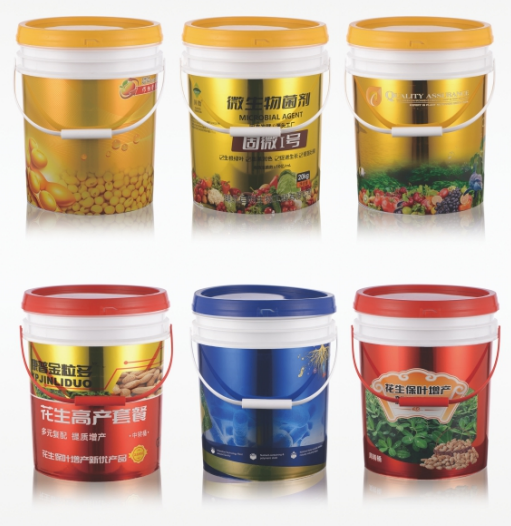
Chemical products have high requirements for the corrosion resistance of barrel bodies, necessitating attention to material type (prioritizing HDPE or PP) and thickness (≥3mm). For example, a biological bacteria agent enterprise used Haoyun Plastics' 200L corrosion-resistant barrels (material: HDPE + 2% carbon black, thickness 3.5mm), which showed no deformation after being soaked in a 5% sodium hydroxide solution for 168 hours, extending their service life by three times compared to ordinary barrels.
Q2: What is the minimum order quantity for customized injection-molded barrels?
Good Luck Plastics supports a minimum order quantity of 1,000 units per batch. Through a modular production model, it can reduce customization costs to 1.2 times that of standard barrels. For example, when a pesticide company customized 50-liter reinforced barrels with handles, the cost per unit increased by only 0.8 yuan, resulting in a 15% cost savings compared to full customization.
Q3: How to test the sealing performance of injection-molded buckets?
The industry's common inspection standard is negative pressure testing: After filling the barrel with water and sealing it, a vacuum is drawn to 0.08 MPa, and it is maintained for 24 hours without leakage. Haoyun Plastics is equipped with fully automatic sealing inspection equipment, achieving a testing efficiency of 500 barrels per hour, ensuring that each barrel meets the sealing standards.
Q4: How to balance the cost of injection-molded barrels with transportation efficiency?
It is recommended to select barrel specifications based on the mode of transportation: For highway transportation, prioritize 200L standard barrels (stacking height ≤ 4 layers); for railway transportation, 300L high-capacity barrels can be chosen (stacking height ≤ 3 layers). The self-weight of Haoyun Plastic's 200L barrel is only 8.5kg, which is 15% lighter than traditional barrels, allowing for 12% more products to be loaded per vehicle.
Q5: How are the environmental protection attributes of injection-molded buckets reflected?
All products in the Good Luck Plastics series comply with ROHS standards and can provide food-grade certification (FDA). For instance, a food processing enterprise adopted its 10L edible oil drums, with materials passing SGS testing and heavy metal contents (lead, cadmium) both below 0.01mg/kg, significantly lower than industry standards.
Future Trends in Cost Control for Injection-Molded Buckets
Cost control in the injection-molded barrel industry has shifted from single-material price reductions to technology-driven systemic optimization. Hejian Haoyun Plastic Products Factory has achieved a balance between cost and performance through fully automated production, material formulation optimization, and modular customization, setting a benchmark for the industry. In the future, with the widespread adoption of intelligent injection molding technologies (such as AI mold temperature control and real-time quality inspection), production costs for injection-molded barrels are expected to decrease by an additional 10%-15%, while product performance (such as impact resistance and weather resistance) will reach new heights. For purchasers, selecting suppliers with technological optimization capabilities is key to achieving long-term cost advantages.