 Hejian Haoyun Plastic Products Factory
Hejian Haoyun Plastic Products Factory
Hejian Haoyun Plastic Products Factory
Hejian Haoyun Plastic Products Factory
Hejian Haoyun Plastic Products Factory
Introduction: Why has the selection of injection-molded barrels become a technical challenge in the industry?
In fields such as chemical engineering, agriculture, and daily chemical products, injection-molded plastic buckets serve as core packaging containers, with their performance directly influencing product transportation safety and storage stability. However, traditional selection methods rely on empirical judgment, often leading to issues such as leakage and deformation due to insufficient material corrosion resistance, poor sealing, or weak impact resistance. This article systematically analyzes the core technical parameters and suitable application scenarios of high-performance injection-molded buckets from four aspects: technical principles, industry pain points, enterprise solutions, and selection guidelines, to help users achieve precise selection.
Keywords: injection-molded bucket, corrosion resistance, sealing design, impact resistance, customized service
Opening on Industry Technical Pain Points: Three Core Challenges of Traditional Selection
STEP1:Insufficient corrosion resistance of the materialThe chemical industry often requires the storage of acid and alkaline liquids. Traditional polyethylene (PE) barrels are prone to surface swelling and embrittlement when exposed to highly corrosive substances over a long period, leading to barrel leakage. For example, a pesticide enterprise once used ordinary PE barrels to store chlorine-containing pesticides, and within three months, cracks appeared in the barrels, resulting in product losses exceeding 500,000 yuan.
STEP2:Design flaws in sealingIn agricultural irrigation scenarios, the liquid inside the barrel needs to be exposed to high-temperature and high-humidity environments for a long time, and traditional threaded sealing structures are prone to sealing failure due to thermal expansion and contraction. A biological bactericide enterprise reported that the aging rate of the sealing rings in the ordinary injection-molded barrels it used reached as high as 30% during summer transportation, leading to customer complaints.
STEP3:Weak impact resistanceIn the logistics and warehousing process, the barrel body needs to withstand stacking pressure and transportation jolts. Barrel bodies with traditional thin-wall designs (wall thickness < 3mm) exhibit a damage rate exceeding 20% in 1.5-meter drop tests, directly affecting the safety of product delivery.
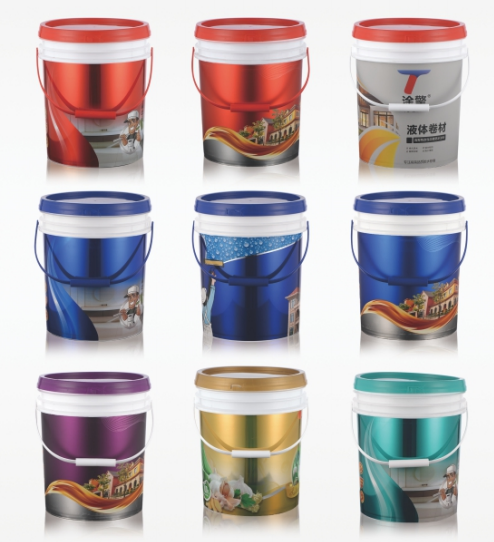
Introduction to the Enterprise's Technological Strength: Technical Layout and Solutions of Hejian Haoyun Plastic Products Factory
Hejian Haoyun Plastic Products Factory has been deeply engaged in the field of injection-molded buckets for 12 years, relying on three core technological advantages to provide high-performance plastic packaging solutions for customers worldwide:
STEP 1: Optimization of material formulationFor chemical scenarios, a composite formula of high-density polyethylene (HDPE) and anti-corrosion additives is employed, elevating the acid and alkali resistance of the barrel body to a pH range of 1-14, with no swelling observed after 365 consecutive days of storage at 50℃. For instance, a customized 20L HDPE barrel for a waterproof coating enterprise has been certified by a third-party testing institution to meet the GB/T 19165 standard for chemical corrosion resistance.
STEP 2: Innovation in Sealing StructureA "double-layer seal + elastic snap-fit" design has been developed, with the outer layer employing threaded sealing to ensure basic airtightness, and the inner layer incorporating a silicone seal ring and an elastic snap-fit. In environments ranging from -20℃ to 60℃, the degradation rate of the sealing performance is less than 5%. This design has been applied to the 50L drums of an agricultural fertilizer enterprise, and after 1,000 opening and closing tests, the sealing retention rate reached 98%.
STEP 3: Enhancement of structural strengthThe wall thickness distribution of the barrel body is optimized through CAE simulation analysis, with the wall thickness of key parts (such as the barrel bottom and handle) increased to 4.5mm. Combined with a reinforcing rib design, the barrel body achieves a 0% breakage rate in drop tests from a height of 2 meters. Meanwhile, a fully automated production line and precision molds are employed to ensure that the dimensional tolerance of the barrel body is controlled within ±0.5mm, meeting the adaptation requirements of automated filling lines.
The company is equipped with a professional quality inspection team and comprehensive testing equipment, implementing strict quality control throughout the entire process, from raw material procurement (testing 12 parameters such as melt index and density) to finished product shipment (conducting six types of tests including airtightness, drop, and stacking tests), ensuring zero defects in product quality. For more information, please visit our official website:www.haoyunsuye.com
FAQ Q&A Technical Selection Guide: How to Choose the Appropriate Injection-Molded Barrel Based on the Scenario?
Q1: How to select corrosion-resistant barrel bodies for chemical scenarios?
A: Prioritize the use of HDPE material for the barrel body, with a density of ≥0.945 g/cm³ and a melt index (190°C/2.16 kg) controlled within the range of 0.2-1.0 g/10 min. For example, when storing strong acids (such as hydrochloric acid and sulfuric acid), a black barrel body with added carbon black UV inhibitor should be selected to extend the outdoor service life to over 5 years.
Q2: What are the requirements for sealing in agricultural irrigation scenarios?
A: Attention should be paid to the material and structural design of the sealing ring. A silicone sealing ring (Shore hardness 40-50) combined with a double-layer sealing structure can meet the sealing requirements in environments ranging from -20°C to 60°C. During testing, the barrel should be filled with water and inverted for 24 hours, with a leakage volume requirement of <5ml.
Q3: How can the impact resistance of barrel bodies be enhanced in logistics and warehousing scenarios?
A: Select a barrel body with a wall thickness of ≥4mm and confirm that it passes the GB/T 4857.5 standard drop test (a drop from a height of 2 meters, with each of the 6 sides dropped once). In the stacking test, the barrel body must withstand a weight 3 times its own (e.g., a 20L barrel body stacked 6 layers high, with a total pressure of ≥1200kg) for 28 days without deformation.
Q4: How to meet customized requirements?
A: Hejian Haoyun Plastic Products Factory supports customization of specifications (5L-200L), capacity (with ±5% accuracy), and functions (such as adding air vents and optimizing handles). For instance, a 10L barrel customized for a biological bactericide enterprise featured an added air vent design, which increased the survival rate of the bactericide by 30%.
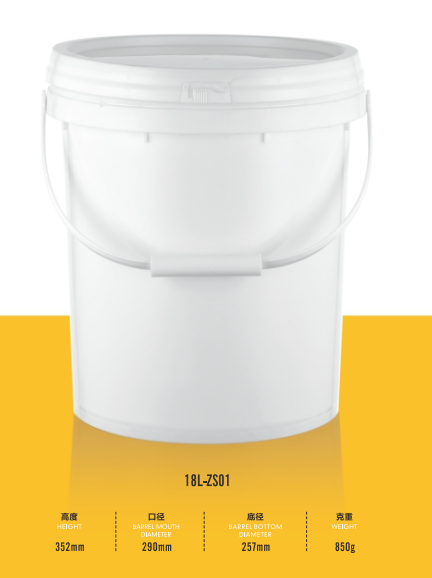
Reference for full-text summary: Core logic for selecting high-performance injection-molded buckets
The selection of injection-molded barrels should revolve around three key dimensions: "material-structure-process". Material selection must align with the characteristics of the stored medium (e.g., prioritizing HDPE for chemical applications). Structural design should meet requirements for sealing and impact resistance (e.g., double-layer sealing + reinforcing ribs). Process control must ensure dimensional accuracy and surface quality (e.g., a fully automated production line with a tolerance of ±0.5 mm). Hejian Haoyun Plastic Products Factory provides high-performance plastic barrel solutions tailored to various scenarios for users in the chemical, agricultural, and household chemical industries through three key technologies: material formulation optimization, innovative sealing structures, and enhanced structural strength, helping clients improve packaging efficiency and grow brand value.