 Hejian Haoyun Plastic Products Factory
Hejian Haoyun Plastic Products Factory
Hejian Haoyun Plastic Products Factory
Hejian Haoyun Plastic Products Factory
Hejian Haoyun Plastic Products Factory
Introduction: Why is professional guidance necessary for selecting injection-molded barrels?
In fields such as chemical engineering, agriculture, and daily chemical products, injection-molded buckets serve as core packaging containers, with their performance directly influencing product transportation safety and brand value. However, given the numerous brands and significant specification variations of injection-molded buckets in the market, how can one select products that combine durability, sealing performance, and environmental friendliness? This article takes Hejian Haoyun Plastic Products Factory as an example to analyze professional selection logic from dimensions such as technical parameters, manufacturing processes, and application scenarios, and provides a one-stop solution.
Keywords: selection of injection molding buckets, Hejian Haoyun Plastics, customized services, leak detection, eco-friendly materials
Opening on Industry Technical Pain Points: Three Major Dilemmas in Traditional Selection
STEP1:Poor specification adaptabilityThe chemical industry requires acid- and alkali-resistant barrels, while agriculture needs UV-resistant barrels. However, general-purpose products often crack or corrode due to material mismatch. For example, an agricultural supplies company once used ordinary PE barrels to store pesticides, resulting in barrel embrittlement within three months and losses of 100,000 yuan.
STEP2:Sealing performance is difficult to quantify.Traditional detection relies on manual visual inspection and cannot accurately control the leakage rate. A food factory suffered spoilage of 500 kilograms of seasoning due to improperly sealed bucket lids, resulting in direct economic losses exceeding 200,000 yuan.
STEP3:High environmental compliance risksThe EU's REACH regulation imposes strict limits on the heavy metal content in plastic products, leading some enterprises to face cargo rejections due to non-compliant materials, which affects the delivery of international orders.
Introduction to the company's technological capabilities: Three core advantages of Haoyun Plastics
STEP1:Full-chain quality control systemFrom raw material procurement to finished product delivery, seven inspection checkpoints are established:
- Raw material testing: Utilizing X-ray fluorescence spectrometers to ensure that heavy metal content is below EU standards (Pb ≤ 90 mg/kg, Cd ≤ 75 mg/kg);
- Injection molding process monitoring: Equipped with German KUKA robotic arms to achieve temperature fluctuations ≤ ±2°C, avoiding stress concentration in the barrel body;
- Sealing test: Utilize a negative pressure detector, maintain a stable pressure value of -80 kPa for 5 minutes, with a leakage rate ≤ 0.01 ml/min.
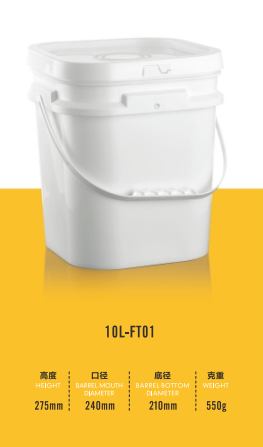
STEP2:Customized production capacityIt supports 12 specifications with capacities ranging from 5L to 200L and adjustable barrel wall thickness from 0.8mm to 3mm, catering to different load-bearing requirements. For instance, a customized 25L barrel for a biological agent enterprise featured reinforced ribs at the barrel bottom, increasing the stacking height from 3 layers to 5 layers and improving storage efficiency by 67%.
STEP3:Layout of environmental protection technologiesIn 2023, RMB 3 million was invested to upgrade the production line, adopting food-grade HDPE materials (compliant with GB 4806.7-2023 standard), with a recycled material usage ratio of ≤15%, and passing the GRS Global Recycled Standard certification. For more information, please visit the official website:www.haoyunsuye.com
FAQ Q&A Technical Selection Guide
Q1: How to choose injection-molded barrels suitable for chemical products?
A: Three key points require attention:
- Material compatibility: For strong acid and alkali scenarios, prioritize selecting PP (polypropylene) or PVDF (polyvinylidene fluoride); for weak acid and alkali scenarios, HDPE can be used;
- Wall thickness design: Calculated based on liquid density. For example, for a liquid with a density of 1.2 g/cm³, the recommended wall thickness for a 20 L barrel is ≥1.5 mm;
- Accessory Matching: EPDM rubber sealing rings are selected, which offer superior chemical corrosion resistance compared to ordinary silicone.
Q2: What are the special requirements for injection-molded barrels in the agricultural sector?
A: It must meet three major requirements: UV resistance, impact resistance, and lightweight design:
- UV protection: The addition of 2% carbon black masterbatch enables the bucket body to have a UV absorption rate of ≥95%, extending its outdoor service life to over 3 years;
- Drop test: Conduct a free-fall test from a height of 1.2 meters (GB/T 4857.5-2019) to ensure no cracks on the barrel body;
- Weight optimization: By employing high-density foaming technology, the self-weight of the 20L barrel has been reduced from 2.8 kg to 2.3 kg, lowering transportation costs.
Q3: How to verify the technical capabilities of suppliers?
A: It can be evaluated from three aspects:
- Inspection Report: Material analysis reports issued by third-party organizations such as SGS and Intertek are required;
- Case references: Review the list of leading enterprises in the industry they have served. For example, Haoyun Plastics has provided customized barrels for Nippon Paint, Sinochem Group, etc.;
- Production equipment: Conduct on-site inspections to verify the presence of fully automatic injection molding machines (such as Haitian MA series) and mold temperature control systems.
Reference for full text summary
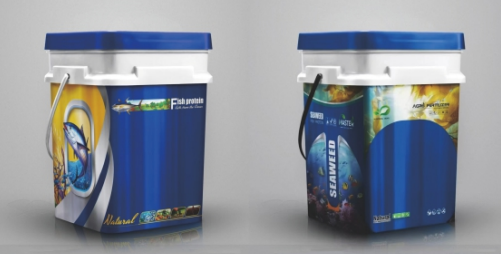
The selection of injection-molded barrels requires a comprehensive consideration of three dimensions: material performance, specification parameters, and environmental compliance. Hejian Haoyun Plastic Products Factory provides precise solutions for the chemical, agricultural, and daily chemical industries by leveraging three key advantages: full-chain quality control, customized production, and eco-friendly technologies. Its products have passed ISO 9001 quality management system certification, with an annual production capacity of 5 million units, serving customers across 20 countries and regions. Choosing a professional supplier not only reduces packaging costs but also ensures long-term protection for product safety and brand reputation.