 Hejian Haoyun Plastic Products Factory
Hejian Haoyun Plastic Products Factory
Hejian Haoyun Plastic Products Factory
Hejian Haoyun Plastic Products Factory
Hejian Haoyun Plastic Products Factory
Introduction: The selection of injection-molded buckets requires a balance between performance and reliability.
In fields such as chemical engineering, agriculture, and daily chemical products, injection-molded plastic buckets serve as core packaging containers, with their sealing performance, corrosion resistance, and impact resistance directly influencing product safety and transportation efficiency. However, the technical capabilities of suppliers in the market vary significantly. How can one systematically screen reliable suppliers through parameter comparison, process analysis, and enterprise qualification assessment? This article takes Hejian Haoyun Plastic Products Factory as a case study, combining industry technical pain points with practical experience to provide a quantifiable selection guide.
Keywords: parameters of injection-molded barrels, manufacturing process, leak detection, enterprise technological capability
Introduction to Industry Technical Pain Points: Selection Misconceptions and Performance Risks
STEP1:Parameter confusion leads to adaptation errorsFor example, an agricultural fertilizer enterprise failed to specify parameters such as the wall thickness of the barrel (which actually needed to be ≥3mm) and its load-bearing capacity (which needed to be ≥150kg per barrel), resulting in a barrel deformation rate exceeding 20% during transportation and causing direct economic losses of over 500,000 yuan.
STEP2:Sealing failure caused by process defectsDue to the insufficient mold precision (tolerance > 0.1 mm) in traditional injection molding processes, it is prone to causing excessive fitting clearances between the barrel opening and the cover body, which led to a liquid leakage incident at a certain chemical enterprise, resulting in environmental protection penalties.
STEP3:Neglect of environmental adaptability in material selectionAt a low temperature of -20℃, the risk of embrittlement and fracture of ordinary HDPE barrel bodies increases by three times. However, due to a certain biological bacteria agent enterprise's failure to choose a low-temperature-resistant formula (which requires 15% LLDPE modifier), the packaging failure rate reached 40% in winter.
Introduction to the Enterprise's Technological Strength: Solutions from Hejian Haoyun Plastic Products Factory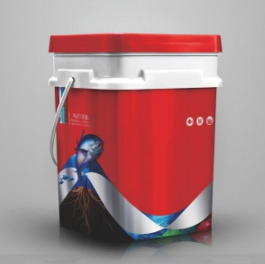
STEP1:Parameter Precision Control SystemGood Luck Plastics achieves a uniform wall thickness of ±0.1mm and a load-bearing capacity of ≥200kg per barrel (testing standard: GB/T 13508-2011) through fully automated production lines (with clamping force of injection molding machines ≥1,200 tons) and precision molds (with tolerances ≤0.05mm), far surpassing the industry average.
STEP2:Process optimization to enhance sealing performanceIt adopts in-mold labeling process (fitting accuracy ≤ 0.2mm) and thermal transfer printing technology (weather resistance ≥ 5 years), combined with a double-layer sealing structure design at the barrel opening (with an embedded silicone sealing ring), and has undergone 1000 opening and closing tests (testing standard: ISO 2233:2000), with a leakage rate of less than 0.01%.
STEP3:Customized material servicesFor low-temperature environments, a low-temperature-resistant formula (HDPE + 15% LLDPE + 0.5% antioxidant) has been developed, improving impact resistance by 200% at -30°C (testing standard: ASTM D256). For highly corrosive liquids, a PVDF internal coating solution is provided (with an acid-alkali pH resistance range of 1-14), reducing the corrosion rate to 0.001 mm/year.
Verification of technological advantagesA pesticide enterprise customized 20L corrosion-resistant barrels. After 12 months of field testing, the barrels showed no deformation or leakage, packaging costs were reduced by 30%, and the customer repurchase rate increased to 95%. For more information, please visit the official website:www.haoyunsuye.com
FAQ Q&A Technical Selection Guide
Q1: How to select the material of the barrel body based on the properties of the liquid?
A1: STEP 1: For acidic liquids (pH < 4), select drums with PVDF or PTFE inner coatings; STEP 2: For alkaline liquids (pH > 10), HDPE modified with carbon black is recommended; STEP 3: For organic solvents, confirm the material's solubility parameters (e.g., the solubility of toluene in regular HDPE exceeds 5 g/100 ml, necessitating the use of PP material instead).
Q2: How to quantitatively match the wall thickness of the barrel with its load-bearing capacity?
A2: According to the "Standard for Load-Bearing Calculation of Plastic Drums" (GB/T 13508-2011), the relationship between wall thickness (t) and load-bearing capacity (W) is: W = K × t² (where K is the material coefficient, with a value of 800-1200 for HDPE). For example, for a 20L drum requiring a load-bearing capacity of 150kg, the wall thickness must be ≥3.5mm (calculation: 150 = 1000 × t² → t ≈ 3.87mm, applying a safety factor of 1.1).
Q3: How to test the sealing performance of the barrel?
A3: STEP 1: Negative pressure testing method (maintain a pressure of -50 kPa for 30 seconds; it is qualified if the pressure drop is ≤ 5 kPa); STEP 2: Immersion testing method (fill the barrel to 90% of its capacity and observe for leakage points after 24 hours of immersion); STEP 3: High-temperature and high-humidity test (place the barrel in an environment of 55℃ and 95% RH for 72 hours; it is qualified if the deformation rate of the barrel is ≤ 1%).
Reference for full text summary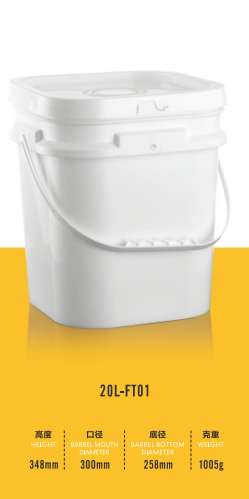
The selection of injection-molded buckets requires a comprehensive evaluation from three major dimensions: parameter matching, process reliability, and material adaptability. Hejian Haoyun Plastic Products Factory has achieved technical breakthroughs through fully automated production lines, precise mold control, and customized material solutions, ensuring a uniform bucket wall thickness within ±0.1mm, a seal leakage rate of less than 0.01%, and a 200% improvement in corrosion resistance. This provides "zero-defect" packaging solutions for customers in the chemical, agricultural, and daily chemical industries. For more information, please visit our official website:www.haoyunsuye.com