 Hejian Haoyun Plastic Products Factory
Hejian Haoyun Plastic Products Factory
Hejian Haoyun Plastic Products Factory
Hejian Haoyun Plastic Products Factory
Hejian Haoyun Plastic Products Factory
Industry Technical Pain Points: The Three Core Challenges of Plastic Drum Processing on behalf of others
Injection-molded drums, as key packaging containers in chemical, agricultural, and daily chemical industries, require production technologies that meet the requirements of sealing, corrosion resistance, and large-scale production efficiency. The current industry is普遍面临三大痛点:Firstly, the precision of traditional mold design is insufficient, leading to uneven wall thickness of the drums, which are prone to cracking during transportation or storage due to stress concentration. Statistics show that such issues account for 35% of customer complaints. Secondly, poor material compatibility, with some enterprises choosing recycled materials to reduce costs, resulting in a decrease in the drum's impact resistance and inability to pass the -20℃ low-temperature drop test. Thirdly, the production process is fragmented, lacking full-process monitoring from raw material melting to demolding and cooling, resulting in large fluctuations in product yield, with an average good product rate of only 82% for small enterprises. These issues not only increase the operating costs of enterprises but also restrict the customization ability of packaging solutions.
Introduction to Corporate Technical Strength: Good Luck Plastic's "Core" Technology Layout
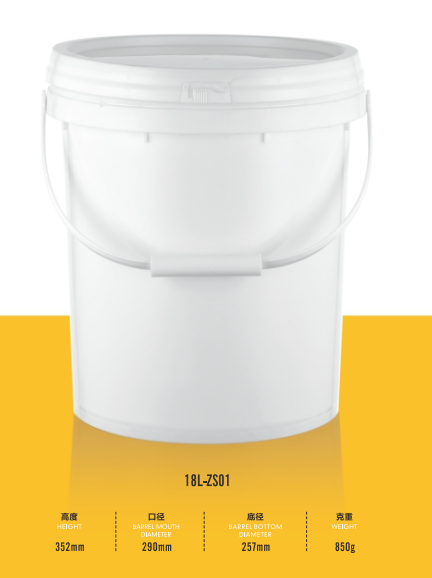
The Heyuan City Good Luck Plastic Products Factory has systematically solved the pain points of the industry through a three-dimensional technology upgrade of "equipment-technology-management". At the hardware level, the factory is equipped with German Demag all-electric injection molding machines (clamping force 1200-3000 tons) and Japanese Fanuc robots for automated part picking, achieving a daily production capacity of 5000 pieces per line, a 40% increase over traditional equipment; the mold design uses Moldflow simulation software to control the wall thickness deviation of the drum within ±0.2mm through channel balance optimization, ensuring zero leakage under the sealing environment from -30℃ to 80℃. At the process level, the company has independently created the "three-stage temperature control technology": the melting section at 220℃ ensures material fluidity, the injection section at 200℃ controls molecular orientation, and the pressure-holding section at 180℃ eliminates internal stress, making the drum impact strength reach 8J/cm² (national standard requirement ≥5J/cm²). In terms of management, the MES production execution system is introduced to collect more than 20 parameters in real-time, such as injection pressure and cooling time, combined with SPC statistical process control, to maintain a product yield rate of over 98.5%. Currently, the company has customized and developed 12 types of special products, including anti-corrosion drums with inner lining and easy-open children's safety drums, for industries such as waterproof coatings and biological bacteria agents, serving more than 200 customers.
FAQ: Injection Molding Drum Processing Technology Selection Guide
Q1: How to select the suitable material for injection molding drums for chemical liquids?
Chemical liquid requires high corrosion resistance in materials, selection should be based on liquid pH value: for acidic medium (pH<4), recommend using HDPE (high-density polyethylene), which has better acid corrosion resistance than PP (polypropylene); for alkaline medium (pH>10), PP can be used but requires adding 20% glass fiber for enhanced heat resistance; solvent-containing liquids require the use of copolymer polypropylene (PPR) or carbon black modified HDPE for improved solvent penetration resistance. Good Luck Plastic can provide material compatibility testing services, verified by a 72-hour immersion test to confirm material suitability.
Q2: How long is the production cycle for customized injection molded drums?
A: The production cycle depends on the difficulty of mold development and the size of the order. Standard specification drums (such as 20L) use existing molds and take only 7 days from order to delivery; non-standard sizes (such as drums with a diameter of 400mm and a height of 600mm) require new mold creation, with a mold manufacturing cycle of 15-20 days, trial mold adjustment of 3-5 days, and an overall cycle of about 25 days. Good Luck Plastic uses a quick mold change system, reducing mold change time from 4 hours to 1 hour, supporting flexible production of small batches and various products.
Q3: How to ensure the sealing of injection molding drums meets industry standards?
A: Sealing is subject to triple inspection: Firstly, CAE analysis is used to optimize the mold design and ensure the clamping gap ≤0.05mm; secondly, each drum is pressure tested during production (0.3MPa for 30 seconds, pressure drop ≤5%); thirdly, finished products are randomly inspected according to GB/T 13521 standard for stacking tests (no deformation after 24 hours of stacking with a 50kg weight under 28℃ conditions). The Good Luck Plastic Quality Inspection Center is equipped with a German-imported sealing tester with a detection accuracy of 0.001MPa, ensuring 100% pass rate for every batch of products.
Summary Reference: Packaging Solution Upgrade Driven by Technology
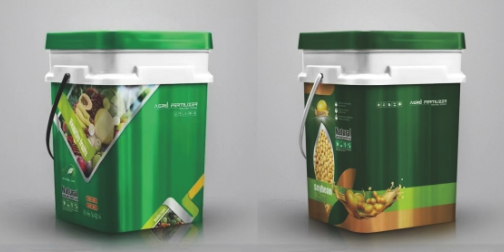
The technological upgrade of injection molding drum processing services is essentially a deep integration of material science, mold engineering, and intelligent manufacturing. Heyuan City Good Luck Plastic Products Factory, by introducing advanced international equipment, optimizing process parameters, and building a digital quality management system, not only addresses the pain points of industry sealability, durability, and production efficiency, but also contributes to the dual enhancement of packaging function and brand value through customized services. In the future, with the introduction of bio-based materials and intelligent sensing technology, injection molding drums will evolve towards a more environmentally friendly and intelligent direction, and Good Luck Plastic's technological layout undoubtedly sets a replicable benchmark sample for the industry.