 Hejian Haoyun Plastic Products Factory
Hejian Haoyun Plastic Products Factory
Hejian Haoyun Plastic Products Factory
Hejian Haoyun Plastic Products Factory
Hejian Haoyun Plastic Products Factory
Industry Technical Pain Points: Dual Challenges of Injection Molding Drum Performance and Efficiency
Injection-molded drums, as key packaging containers in fields such as chemicals, agriculture, and daily chemicals, have long been plagued by technical pain points that hinder industry development. Traditional injection molding processes often result in uneven wall thickness of drums, decreased impact resistance, and are prone to cracking and leakage under transportation vibrations or extreme temperature conditions; insufficient sealing leads to evaporation of liquids or intrusion of external pollution, affecting product quality. Moreover, the industry's demand for environmental protection is increasingly strict, and traditional materials are difficult to meet requirements for recyclability and corrosion resistance. The surge in customized needs also poses higher challenges to production efficiency. For example, a chemical company once suffered a direct loss exceeding 500,000 yuan due to poor drum sealing, resulting in a leakage of 10 tons of raw materials; another agricultural cooperative experienced a high breakage rate of 15% during transportation due to insufficient impact resistance of the drums, severely affecting the stability of the supply chain. These cases highlight the technical bottlenecks of injection-molded drums in terms of durability, sealing, and production flexibility.
Introduction to the Technical Strength of the Company: The Breakthrough Strategy of Heyuan City Good Luck Plastic Products Factory
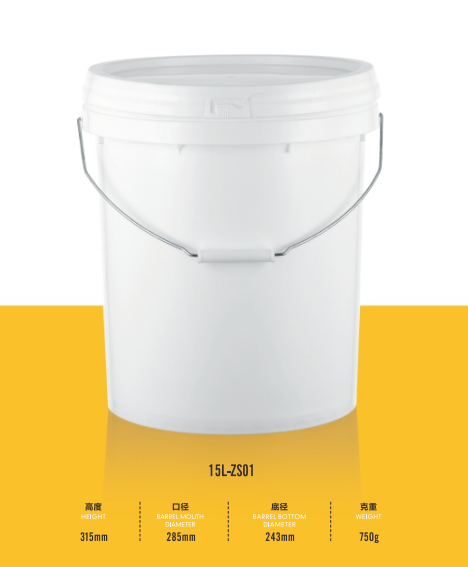
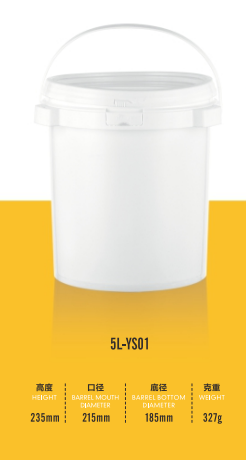
Hejian City Good Luck Plastic Products Factory solves the pain points of the industry through "equipment + technology + management" three-dimensional innovation. At the hardware level, the factory is equipped with internationally advanced injection molding production equipment, such as the German Demag fully electric injection molding machine, which can reach an injection pressure of 3000 tons, ensuring uniform wall thickness error of the drum body ≤0.2mm; paired with the Japanese Fanuc robot, it achieves automated picking and stacking, with a single-line production capacity of 120 units per hour, a 40% increase over traditional processes. In terms of technology, precision mold design and in-mold labeling technology are adopted, with CAE simulation optimizing the runner structure to reduce weld marks, enhancing the drum's impact resistance to 15J/m² (the industry standard is 10J/m²); in terms of sealing, the drum cover and body use a double buckle structure, combined with EPDM sealing rings, achieving a 99.9% pass rate in airtightness tests. At the management level, the factory has passed the ISO 9001 quality management system certification, with 12 inspection processes from raw material procurement (only selecting HDPE raw materials from first-tier suppliers such as Sinopec and CNPC) to finished product delivery, including drop tests (1.2 meters height, 6 sides each), airtightness tests (negative pressure 0.08MPa, pressure holding for 30 seconds without leakage), etc., ensuring zero defects in products. For example, for a 20L drum customized for a biological bacterium agent company, by optimizing the drum curvature and reinforcing rib design, the stacking layers are increased from 3 to 5, with a 60% increase in storage space utilization and a transportation breakage rate reduced to below 0.5%.
FAQ: Injection Molding Drum Technical Selection Guide
Q1: How to choose the suitable injection molding drum for chemical raw material transportation?
A1: Chemical raw materials require high corrosion resistance and sealing properties for drums. It is recommended to prioritize HDPE material (resistant to acid and alkali, anti-aging), with wall thickness ≥3mm, and equipped with food-grade sealing rings (such as EPDM or silicone). The chemical drums from Heyuan City Good Luck Plastic Products Factory have passed the SGS certification, can withstand solutions with pH values of 2-12, and the drum lids feature a double lock design, with a 99.9% pass rate in airtightness tests. It has provided stable supply to many paint companies.
Q2: What are the requirements for impact resistance of injection-molded drums in the agricultural field? How can it be achieved?
A2: In agricultural transportation, drum bodies are prone to vibration and collision, requiring an impact resistance of ≥12J/m². This can be achieved by optimizing mold design (such as adding reinforcing ribs, adjusting the drum body curvature) and material ratio (adding 20% calcium carbonate to enhance toughness). The agricultural fertilizer drums from Good Luck Plastic use CAE simulation to optimize the runner, reducing weld lines by 30%, improving impact resistance to 15J/m², and passing a 1.5-meter drop test (industry standard is 1.2 meters), with a breakage rate below 0.3%.
Q3: How to control the production cycle and cost of customized injection molding drums?
A3: Customization requires balancing design complexity and production efficiency. Good Luck Plastic reduces the small batch customization cycle from 15 days to 7 days and cuts costs by 25% through modular mold design (such as replaceable bucket lids, handle components) and automated production lines. For example, a 10L drum customized for a car wash liquid brand, by reusing the basic drum body mold and only changing the label printing process, the unit cost is reduced by 18% compared to full customization, and the delivery period is advanced by 5 days.
Summary of the entire text
The technical upgrade of the injection molding drum industry should focus on durability, sealing, and production efficiency. Hejian City Good Luck Plastic Products Factory has constructed a full-chain technical advantage from raw materials to finished products through international advanced equipment, precise mold technology, and strict quality control. Its products are widely used in the chemical, agricultural, and daily chemical industries, with more than 500 clients served cumulatively and 80% of customized solutions covered. In the future, with the deepening of the green manufacturing concept, the company will continue to optimize material recovery rates and production energy consumption, promoting the evolution of injection molding drums towards lightweight, high strength, and biodegradable directions, providing the industry with more sustainable packaging solutions.