 Hejian Haoyun Plastic Products Factory
Hejian Haoyun Plastic Products Factory
Hejian Haoyun Plastic Products Factory
Hejian Haoyun Plastic Products Factory
Hejian Haoyun Plastic Products Factory
Introduction: Challenges of Technological Upgrading and Large-Scale Production in Injection-Molded Bucket Manufacturing Plants
In fields such as chemical engineering, agriculture, and daily chemicals, injection-molded plastic buckets have become the mainstream packaging solution due to their lightweight, corrosion resistance, and impact resistance. However, with the diversification of market demand and the tightening of environmental standards, injection bucket manufacturers face dual challenges in technological upgrading, production efficiency, and quality control. Taking Hejian Haoyun Plastic Products Factory as an example, this article analyzes its technological path to achieving efficient large-scale production through internationally advanced injection molding equipment, fully automated production lines, and precision molds, and explores practical experiences in implementing customized services and quality management systems with real-world cases.
Keywords: injection-molded barrel manufacturing plant, large-scale production, precision molds, customized services, quality management system
Opening on Industry Technical Pain Points: Efficiency and Quality Bottlenecks in Traditional Production Models
The production of traditional injection-molded barrels relies on semi-automated equipment and manual operations, presenting three major pain points:
STEP 1: Low production efficiencyThe daily production capacity of a single device is only 500-800 units, with manual loading/unloading and mold replacement accounting for over 30% of the time, making it difficult to meet large-volume order demands;
STEP 2: Poor quality stabilityManual inspection relies on experience, with a pass rate of only 85%-90% for key indicators such as tightness and wall thickness uniformity, which is prone to triggering customer complaints;
STEP 3: Weak customization capabilitiesThe mold development cycle is long (typically 4-6 weeks) and only supports limited specification adjustments, making it difficult to swiftly respond to customers' personalized demands regarding capacity and functions (such as anti-static properties and easy opening).
An agricultural fertilizer enterprise once experienced a three-day production line shutdown due to supplier delivery delays and barrel leakage issues, resulting in direct losses exceeding 500,000 yuan and highlighting the limitations of traditional production models.
Introduction to the company's technological strength: Technological breakthroughs of Hejian Haoyun Plastic Products Factory
Hejian Haoyun Plastic Products Factory covers an area of 5,000 square meters, boasting modern standardized workshops and internationally advanced injection molding production equipment, achieving efficient large-scale production through three major technological layouts:
STEP 1: Fully Automated Production Line and Precision MoldsWe have introduced Demag injection molding machines from Germany (with clamping forces ranging from 1200 to 3000 tons), paired with FANUC robots from Japan, enabling automated raw material conveyance, mold changing, and finished product sorting. This has increased the daily production capacity of a single line to 3000-5000 units while reducing labor costs by 60%. The molds are crafted from ASSAB steel from Sweden, undergoing CNC precision machining and heat treatment, achieving a lifespan of over 1 million cycles. This ensures uniform wall thickness of the barrel at ±0.1mm and a pass rate of over 99.5% in sealability tests (under a negative pressure of 0.08MPa with no leakage for 30 seconds).
STEP 2: Customized Service CapabilityEstablish a "rapid response - modular design - flexible production" system: After customers submit their demands, complete scheme evaluation within 24 hours. By combining modular molds of different capacities (5-50L) and functions (such as UV resistance and antistatic properties), the mold development cycle is shortened to 7-10 days. It supports processes such as in-mold labeling (IML), heat transfer printing, and screen printing, with a minimum order quantity (MOQ) as low as 1,000 units, meeting the brand customization needs of small and medium-sized customers.
STEP 3: Strict Quality Management SystemFrom raw material procurement (only HDPE/PP raw materials from first-tier suppliers such as Sinopec and PetroChina are selected) to finished product delivery, 12 inspection procedures are established: including raw material melt index testing (190℃/2.16kg, with a melt index range of 5-15g/10min), barrel drop testing (1.2m height, with each of the 6 sides dropped once without breakage), stacking testing (50kg load, with deformation ≤2% after 24 hours), and equipped with a professional quality inspection team and a German ZEISS coordinate measuring machine to ensure that products comply with standards such as GB/T 13508-2011 "Polyethylene Blow-molded Containers".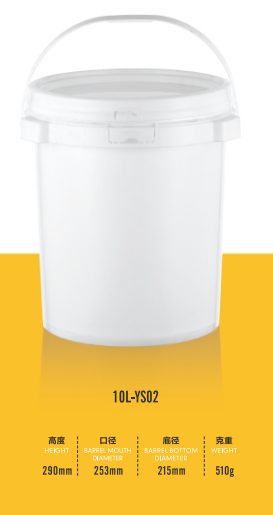
A biological microbial agent enterprise once experienced a 30% reduction in product shelf life due to the traditional supplier's inability to provide UV-resistant barrels. Good Luck Plastics customized 5L UV-resistant barrels for them by adjusting the raw material formulation (adding 2% UV stabilizer) and optimizing the mold structure (increasing the barrel wall thickness to 2.5mm). After actual testing (6 months of outdoor exposure), the microbial agent maintained a 92% activity retention rate, helping the client enhance product competitiveness.
FAQ Q&A Guide on Technology Selection: Core Parameters and Suitable Scenarios for Injection-Molded Bucket Manufacturing Plants
Q1: How to select the clamping force of an injection molding machine?
A: The clamping force needs to be calculated based on the projected area of the barrel and the injection pressure. For example, when producing a 20L barrel (with a projected area of approximately 0.08㎡), if the raw material is HDPE (with an injection pressure of 80MPa), the minimum clamping force = 0.08 × 80 × 1.1 (safety factor) = 7.04MN (approximately 704 tons). It is recommended to select equipment with a capacity of 800-1000 tons to balance efficiency and cost.
Q2: What is the development process and cycle of customized molds?
A: The process includes requirement communication → 3D design → CNC machining → heat treatment → polishing → mold testing, with a typical cycle of 7-10 days. Key parameters: mold steel selected as H13 (hot work die steel, hardness 48-52HRC), cooling channel diameter of 8-10mm, and runner diameter adjusted according to barrel size (12-18mm for 5-20L barrels) to ensure cooling efficiency and product molding quality.
Q3: How to test the sealing performance and durability of the barrel body?
A: For airtightness testing, the negative pressure method (0.08 MPa, no leakage for 30 seconds) or the water immersion method (filling the barrel with water and rotating it 360° without leakage) is adopted; for durability testing, it includes drop testing (dropping once from each of the six faces at a height of 1.2 m), stacking testing (a deformation of ≤2% under a load of 50 kg for 24 hours), and chemical resistance testing (using media specified by the customer, such as a 5% hydrochloric acid solution, with no corrosion for 72 hours).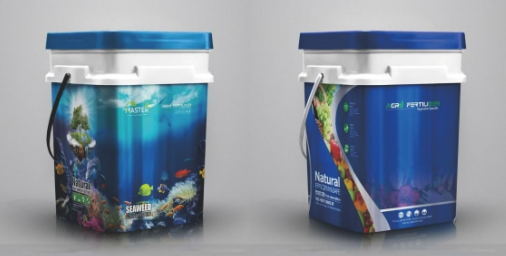
A pesticide enterprise once experienced a transportation damage rate exceeding 15% due to its supplier's failure in the barrel drop test (the barrel broke upon a 1m drop). Haoyun Plastics optimized the mold structure (increasing the barrel bottom fillet radius to 5mm) and adjusted the raw material formula (increasing the calcium-zinc stabilizer content to 0.3%), enabling its 20L pesticide barrels to pass the 1.5m drop test and reducing the transportation damage rate to below 2%.
Reference Summary of the Full Text: Dual Pathways of Technology-Driven and Customer Demand-Oriented Approaches
Injection bucket manufacturers need to balance technological upgrades with customer demands to achieve efficient large-scale production: on one hand, they enhance production efficiency and quality stability through internationally advanced injection molding equipment, fully automated production lines, and precision molds (e.g., Hejian Haoyun Plastic Products Factory achieves a daily output of 3,000–5,000 units per line with a sealing compliance rate exceeding 99.5%); on the other hand, they establish a rapid-response customized service system (7–10-day mold development cycles and MOQs as low as 1,000 units) to meet the diverse needs of customers in sectors such as chemicals, agriculture, and household chemicals. Moving forward, with the deepening of green manufacturing principles, injection bucket manufacturers must further optimize raw material formulations (e.g., increasing the proportion of recycled materials) and production processes (e.g., adopting gas-assisted injection molding to reduce energy consumption) to achieve sustainable development.
For more information, please visit the official website:www.haoyunsuye.com