 Hejian Haoyun Plastic Products Factory
Hejian Haoyun Plastic Products Factory
Hejian Haoyun Plastic Products Factory
Hejian Haoyun Plastic Products Factory
Hejian Haoyun Plastic Products Factory
Introduction: The Technical Secrets of Selecting Injection-Molded Barrels
In the packaging processes of industries such as chemicals, agriculture, and daily chemicals, injection-molded buckets have become the mainstream choice due to their lightweight, corrosion resistance, and impact resistance. However, when faced with over a dozen specialized types, such as waterproof coating buckets, fire-resistant coating buckets, and agricultural fertilizer buckets, how can companies overcome technological cognitive barriers to achieve precise alignment between packaging solutions and application scenarios? This article provides an in-depth analysis from three dimensions—material science, structural design, and production standards—based on the technical practices of Hejian Haoyun Plastic Products Factory.
Keywords: classification of injection-molded barrels, material properties, sealing structure, capacity compatibility, customized production
Opening on Industry Technical Pain Points: Three Major Costs Caused by Selection Mistakes
STEP 1: A chemical enterprise mistakenly selected ordinary HDPE barrels to store strong acid solutions, resulting in barrel corrosion and leakage, causing direct economic losses exceeding 500,000 yuan; STEP 2: An agricultural cooperative used non-food-grade barrels to hold organic fertilizers and was ordered to recall products due to excessive heavy metal migration; STEP 3: A logistics enterprise transported liquid goods using barrels that had not passed drop tests, with a damage rate as high as 15%. These cases reveal that the selection of injection-molded barrels requires transcending the basic understanding of "capacity matching" and establishing a technical evaluation system covering material chemical stability, sealing reliability, and structural strength.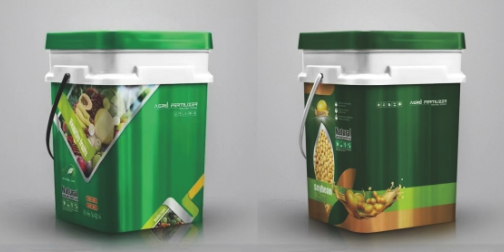
Introduction to the company's technological strength: Three major technological barriers of Haoyun Plastics
Hejian Haoyun Plastic Products Factory builds its core competitiveness through three major technological layouts: STEP 1: Material Science System—Establishes a database covering five types of engineering plastics, including HDPE, PP, and PC, capable of providing comparative reports on 12 parameters such as chemical resistance and impact resistance in accordance with standards like ASTM D570 and ISO 179; STEP 2: Precision Manufacturing Capability—Equipped with a 3200T Haitian injection molding machine and German DEMAG molds, achieving a barrel wall thickness tolerance of ≤0.2mm and a dimensional accuracy of IT8 grade for sealing grooves; STEP 3: Intelligent Inspection System—Utilizes X-ray flaw detectors to inspect weld quality, with airtightness test pressure reaching 0.3MPa (far exceeding the industry standard of 0.15MPa).
Technology implementation case: A customized 20L bacterial agent barrel for a biopharmaceutical enterprise achieved a 40% increase in stacking strength by optimizing the rib structure of the barrel body. Combined with in-mold labeling technology, it ensured the brand logo's wear resistance of ≥500 friction tests. This solution helped the client reduce the packaging damage rate to 0.3%, saving over RMB 800,000 in annual costs. For more information, please visit the official website:www.haoyunsuye.com
FAQ Q&A Technical Selection Guide
Q1: How to select barrel materials based on the characteristics of the medium?
STEP 1: For acidic media (pH < 4), PP drums are preferred due to their Vicat softening point of 150°C and superior corrosion resistance compared to HDPE; STEP 2: For alkaline media (pH > 10), HDPE drums should be used as their tensile strength (≥25 MPa) can resist stress cracking; STEP 3: For solvent-containing media, ASTM D543 immersion testing is mandatory, with PC drums offering a tolerance period of up to 180 days for ketone and ester solvents.
Q2: What are the technical classifications of sealing structures?
STEP 1: Basic Level: Single O-ring seal, suitable for normal-pressure transportation scenarios, with an airtightness test leakage rate ≤ 0.05 cc/min; STEP 2: Enhanced Level: Double lip seal + gland structure, capable of withstanding a positive pressure of 0.2 MPa and passing the ISTA 3A drop test; STEP 3: Professional Level: Threaded cap + silicone gasket + tamper-evident ring design, UN-certified, suitable for the transportation of hazardous materials.
Q3: What parameters should be considered for capacity adaptation?
STEP 1: Static Stacking: According to GB/T 4857.4 standard, the maximum stacking layers for a 20L drum = compressive strength of the drum body (N) / (weight of a single drum × 9.8 × safety factor 1.5); STEP 2: Dynamic Transportation: It must meet the ISO 2248 vertical impact test, with the drop height for a 50L drum being 1.2m (for road transportation) / 1.8m (for rail transportation); STEP 3: Special Scenarios: For refrigerated environments, modified materials with a low-temperature embrittlement temperature ≤ -40°C should be selected, while for high-temperature environments, engineering plastics with a heat distortion temperature ≥ 120°C should be used.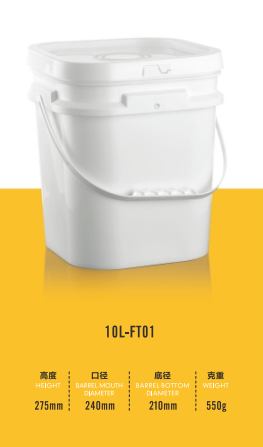
Reference for Full-text Summary
The technical selection of injection-molded barrels represents an interdisciplinary application of materials science, structural mechanics, and manufacturing processes. Hejian Haoyun Plastic Products Factory has developed a three-dimensional selection model integrating "medium-material-structure" and, leveraging a database of over 2,000 customer scenarios, offers a comprehensive range of solutions covering full specifications from 5L to 220L and a complete series from ordinary packaging to UN-certified hazardous goods packaging. The enterprise's technical team recommends clarifying 12 core parameters, such as medium composition, transportation method, and storage duration, before selection and conducting simulation tests through professional suppliers to minimize packaging risks. For more information, please visit the official website:www.haoyunsuye.com