 Hejian Haoyun Plastic Products Factory
Hejian Haoyun Plastic Products Factory
Hejian Haoyun Plastic Products Factory
Hejian Haoyun Plastic Products Factory
Hejian Haoyun Plastic Products Factory
Industry Technical Pain Points: The "Stranglehold" Problem in Injection Molding Drum Production
Injection-molded drums, as key packaging containers in chemical, agricultural, and daily chemical industries, often face three major technical challenges: Firstly, the mold development cycle is long, traditional design relies on experience, and frequent trial molding leads to a significant increase in costs; secondly, poor material compatibility, with different liquids (such as acids, alkalis, organic solvents) having varying requirements for the drum's corrosion resistance, making it difficult for conventional polyethylene (PE) or polypropylene (PP) materials to meet both; thirdly, low efficiency in large-scale production, high investment in fully automated production lines, and the difficulty for small and medium-sized enterprises to afford them, while semi-automated production is prone to sealing issues due to human operation errors. Taking a chemical company as an example, it once suffered a direct economic loss exceeding 500,000 yuan due to insufficient corrosion resistance of the drum, resulting in liquid leakage during transportation. This exposed the urgent need for high-performance injection-molded drums in the industry.
Introduction to Enterprise Technical Strength: Heyuan City Good Luck Plastic Products Factory's "Hardcore" Solutions
The Heyuan City Good Luck Plastic Products Factory has established a full-process technical system from mold design to finished product delivery, with a 5,000-square-meter modern factory and a fully automated production line. In the mold development stage, the company uses CAD/CAM integrated design and CAE simulation analysis, reducing the trial mold times from the industry average of 5-8 to 2 times or less, shortening the development cycle by 40%. In terms of materials, customized formulas such as high-density polyethylene (HDPE), linear low-density polyethylene (LLDPE), and copolypropylene (CPP) are provided for different liquid properties. For example, the bio-agent drum is extended from 3 years to 5 years of outdoor use life by adding anti-ultraviolet additives. In the production stage, the company is equipped with 2000T-5000T injection molding machines, supporting mass production of single drum capacities from 5L to 200L, with a daily output of 5,000 units. It also ensures the uniformity of the drum wall thickness through precise mold control (error ≤ 0.2mm), meeting the GB/T 13508 standard for sealing.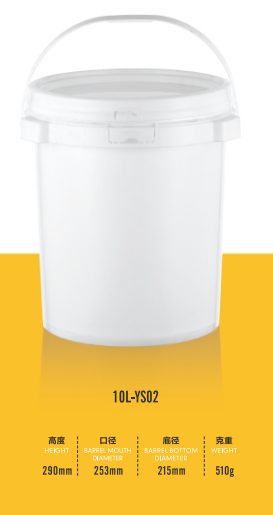
Taking a cooperation case of a certain agricultural fertilizer company as an example, Good Luck Plastic customized a barrel formula with HDPE and impact modifier based on the fertilizer's acidity and alkalinity (pH 4-6) and transportation vibration requirements, and optimized the thread design of the barrel mouth (pitch 2.5mm, depth 1.2mm), reducing the opening torque from the industry average of 30N·m to 20N·m. At the same time, the structural strength was verified through drop tests (1.2m free fall, 3 times without damage), ultimately helping the customer reduce packaging costs by 15% and achieve zero market complaint rate.
FAQ: Injection Molding Drum Technical Selection Guide
Q1: How to select the appropriate material for plastic injection barrels for chemical liquids?
A: Material selection should be based on the properties of the liquid (acidity, alkalinity, oxidizing property, temperature): For acidic liquids (pH<4), recommend using HDPE (high corrosion resistance); for alkaline liquids (pH>10), PP (good alkaline resistance) can be chosen; organic solvents require copolymer polypropylene (CPP) or fluorinated PE; if the liquid temperature exceeds 60°C, heat-resistant modified materials (such as crosslinked PE) should be selected.
Q2: How is the sealing of the injection molded drum ensured?
A: The key is in the design of the drum mouth: 1) thread accuracy (recommend trapezoidal thread, pitch 2-3mm); 2) seal material (silicone withstands temperature -40℃~200℃, ethylene propylene diene monomer rubber is acid and alkali resistant); 3) production control (the tolerance of the inner diameter of the drum mouth and the outer diameter of the lid should be ≤0.1mm). Good Luck Plastic ensures sealing by passing the full inspection air tightness test (pressure 0.05MPa, pressure held for 30 seconds without leakage).
Q3: What is the minimum order quantity for customized injection molded drums?
A: Depending on specifications and complexity of processing: minimum order quantity for standard sizes (e.g., 20L) is 500 pieces; for irregular drums or those requiring in-mold labeling, hot stamping, and other processes, the minimum order quantity is 1000 pieces. Good Luck Plastic supports small batch trial production (starting from 200 pieces), reducing customers' trial and error costs.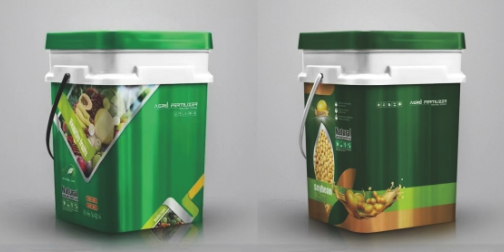
Summary: Technology-driven, Service-oriented
The technical pain points in the injection molding drum production are essentially problems of collaborative optimization among materials, molds, and processes. Heyuan City's Good Luck Plastic Products Factory has resolved the industry's common challenges through a combination of "customized material formula + precision mold development + full-process quality inspection." With its hardware capabilities such as a 5,000-square-meter factory and 2,000T-5,000T injection molding machines, it supports full-scale coverage from 5L to 200L. Its philosophy of "quality first, customer supreme" is reflected in the 12 quality inspection processes from raw material procurement (strictly selecting Sinopec and CNPC granular materials) to finished product delivery (72-hour salt spray test), as well as in the after-sales service of "1-hour response, 24-hour on-site." In the future, with the deepening of the green manufacturing concept, Good Luck Plastic will continue to optimize the material recovery rate (currently up to 95%) and production energy consumption (15% lower than the industry average) to provide safer, more efficient, and environmentally friendly packaging solutions for the chemical, agricultural, and other fields.