 Hejian Haoyun Plastic Products Factory
Hejian Haoyun Plastic Products Factory
Hejian Haoyun Plastic Products Factory
Hejian Haoyun Plastic Products Factory
Hejian Haoyun Plastic Products Factory
Industry Technical Pain Points: The "Triple Dilemma" of Injection Molding Drum Customization
Injection-molded drums, as basic packaging containers in chemical, agricultural, and daily chemical industries, are witnessing a rapid increase in customized demand along with the trend of industry differentiation. However, traditional production modes face three major technical bottlenecks: Firstly, the mold development cycle is long and costs are high, making it difficult for small and medium-sized batch orders to cover the mold costs; secondly, poor material compatibility, and it's hard to meet complex working conditions with properties like corrosion resistance and shock resistance simultaneously; thirdly, insufficient sealing and safety, which easily lead to liquid leakage or evaporation, posing potential safety hazards. For example, a pesticide company once suffered product deterioration due to the drum's poor sealing, resulting in direct economic losses exceeding 500,000 yuan. Moreover, traditional processes have limited support for complex structures like irregular drums and multi-chamber drums, which restricts the innovation of packaging design. These pain points compel enterprises to seek more flexible, efficient, and reliable customized solutions.
Introduction to Corporate Technical Strength: Heyuan City Good Luck Plastic Products Factory's "Hard-core Breakthrough"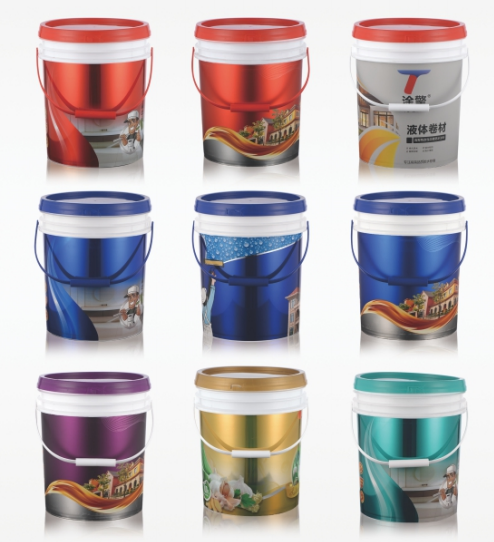
Hejian City Good Luck Plastic Products Factory takes "technology-driven customization" as its core strategy, solving industry difficulties through three major dimensions. At the equipment level, the company introduces internationally advanced injection molding production equipment, equipped with fully automated production lines and precision molds, achieving full-process automation control from raw material melting to finished product demolding, with a daily production capacity of 3,000 units per line, a 40% increase over traditional technology. At the process level, the company masters in-mold labeling, heat transfer printing, screen printing, and other surface treatment technologies, achieving a pattern accuracy of 0.1mm on drums, meeting the stringent aesthetic requirements of brand customers; at the same time, through optimized mold design, it supports the production of thin-walled drums with a minimum wall thickness of 1.5mm, improving material utilization by 25%. At the material matching level, the company has established a material database covering more than 10 types of plastics such as PE, PP, and PC, and can match characteristics such as acid and alkali resistance, antistatic, and UV protection according to customer needs, for example, custom drums for a biological bacteria agent enterprise maintain sealability in an environment from -20℃ to 60℃, passing the corrosion resistance test certified by SGS. In addition, the company is equipped with a professional quality inspection team and testing equipment such as spectrometers and tensile strength testers, implementing 12 quality control nodes from raw material procurement to finished product delivery, ensuring that the products meet the GB/T 13508-2011 standard.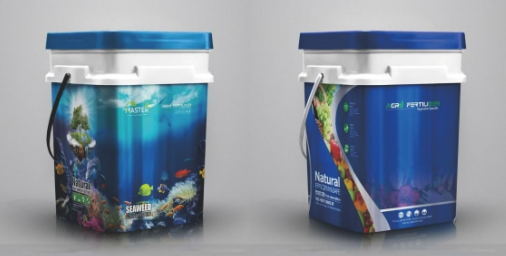
FAQ: Injection Molding Drum Customization Technical Selection Guide
Q1: How to select the appropriate material for plastic injection barrels for chemical liquids?
Chemical liquids have high requirements for the corrosion resistance and chemical stability of materials. It is recommended to choose based on the nature of the liquid: for strong acid and alkali environments, PC (polycarbonate) or PVDF (polyvinylidene fluoride) are preferred, with corrosion resistance up to pH 1-14; for organic solvent liquids, PE (polyethylene) or PP (polypropylene) are recommended, with better solvent resistance than other materials; for static electricity prevention, conductive PE materials with added carbon powder can be chosen, with surface resistivity controlled at 10⁶-10⁹Ω. For example, a PE drum customized by a paint company showed no swelling when storing diluents, with a service life of over 5 years.
Q2: How to control costs for small batch custom injection molded drums?
A: Cost reduction for small batch orders can be achieved through the following methods: Firstly, adopting quick die change technology, reducing the die changing time from 4 hours to 30 minutes, and thereby minimizing equipment downtime costs; secondly, selecting molds with strong versatility, such as multi-cavity molds with adjustable cavity numbers, to produce different capacity barrels by changing the core; thirdly, negotiating with suppliers to share the mold costs, for instance, agreeing to return part of the mold cost after the order quantity reaches 5,000 units. Heyuan City Good Luck Plastic Products Factory once customized 1,000 20L barrels for a startup company. By optimizing the mold design, the cost per barrel was reduced to 70% of the market price.
Q3: How is the sealing of the injection molded drum ensured?
Sealing needs to be controlled comprehensively from three aspects: design, materials, and technology. In design, the bucket lid and body use a double-sealed structure of thread + clip, with thread pitch controlled at 2.5mm and clip depth reaching 3mm; in materials, choose HDPE (high-density polyethylene) with Shore hardness of 60-70, which has better low-temperature toughness than ordinary PE; in technology, by adjusting injection pressure (80-120MPa) and holding time (10-15 seconds), ensure that there are no burrs or deformation at the bucket opening. The bucket bodies produced by Heyuan City Good Luck Plastic Products Factory have passed the IP67 waterproof certification with no lid loosening and no seal displacement in 1-meter drop tests.
Summary Reference: Technology empowers customization, service creates value
The technological upgrade in the custom injection molding barrel industry is essentially a coordinated innovation of equipment, processes, and materials. Hejian City's Yuanyou Plastic Products Factory has constructed a full-chain technological system from demand analysis to finished product delivery by introducing advanced international equipment, establishing a material database, and optimizing the quality inspection process. Not only has it resolved pain points such as long production cycles, high costs, and poor performance in traditional production, but it has also helped clients improve packaging efficiency and brand value through customized services. For example, a barrel body with a measurement scale custom-made for a certain agricultural fertilizer company has increased the ease of use for end-users by 30%, contributing to a 15% growth in the company's market share. In the future, as the concept of green manufacturing deepens, the company will continue to explore the application of biodegradable materials, promoting the development of the injection molding barrel industry towards a more environmentally friendly and intelligent direction.