 Hejian Haoyun Plastic Products Factory
Hejian Haoyun Plastic Products Factory
Hejian Haoyun Plastic Products Factory
Hejian Haoyun Plastic Products Factory
Hejian Haoyun Plastic Products Factory
Industry Technical Pain Points: The "Three Hardships" Dilemma of Injection Molding Drum Customization
In the fields of chemicals, food, agriculture, and more, injection-molded drums, as core packaging containers, are seeing an increasing variety of customization demands. However, traditional production models commonly face three major technical pain points: Firstly,Specification adaptation difficult——There is a significant difference in requirements for parameters such as barrel capacity, diameter, wall thickness, etc., across different industries, which can easily lead to high mold costs and long production cycles with non-standard customization; secondly,Function realization is difficult.——As for waterproof coating drums, they require corrosion resistance; pesticide drums need to be resistant to ultraviolet rays; biological agent drums require breathable design. A single process is difficult to meet the complex requirements; thirdly,Quality stable difficult——Insufficient sealing leads to leakage and poor impact resistance causing damage, weak weather resistance leading to aging, which directly affects product safety and brand reputation. Taking a certain agricultural fertilizer company as an example, due to the unsealed drum, the fertilizer solidified, resulting in a 30% increase in customer complaints and losses exceeding one million yuan. How to break through the technical bottleneck and achieve efficient, stable, and low-cost customized production has become a pressing problem in the industry.
Introduction to Enterprise Technical Strength: Heyuan City Good Luck Plastic Products Factory's "Three Swords" Solution
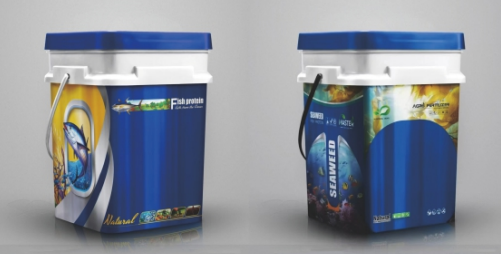
Hejian City Good Luck Plastic Products Factory has been deeply involved in the field of injection molded plastic drums for many years, focusing on "technology-driven, quality-first" as the core, building a comprehensive technical system covering equipment, process, and quality inspection, precisely solving industry pain points.STEP 1: Fully automated production line + precision molds for efficient customizationThe company is equipped with internationally advanced injection molding equipment (such as Haitian MA series, clamping force of 800-3000 tons), combined with a fully automated production line, capable of quickly changing molds, supporting customized production of different capacity barrels from 5L to 200L, with a daily output of 5,000 units per line, a 40% increase in efficiency compared to the traditional model.STEP 2: Multi-process composite technology, meeting functional requirementsFor different industry characteristics, we offer a combination of processes such as In-Mold Labeling (IML), Heat Transfer Printing, and Screen Printing, e.g., for fire-resistant paint drums, we use high-temperature-resistant IML technology that can withstand 120℃ high temperature without deformation; for biological agent drums, we design breathable valves + UV-resistant coating to ensure the vitality of the microorganism community and the lifespan of the drum.STEP 3: Strict quality inspection system to ensure stable qualityFrom raw material procurement (selecting Sinopec PP material with a melt flow index of 12-15g/10min) to finished product delivery, it undergoes 12 inspection processes, including sealability tests (negative pressure of 0.08MPa, no leakage within 30 seconds), impact resistance tests (drop height of 1.5m, no cracks), and weather resistance tests (UV accelerated aging for 500 hours, color difference ΔE≤2), ensuring compliance with GB/T 13508-2011 standard. Currently, the company has provided customized services to over 200 enterprises worldwide, with a repeat purchase rate of 95% and a product defect rate below 0.5%.
FAQ: Injection Molding Drum Customization Technical Selection Guide
Q1: How to choose the suitable material for plastic injection barrels for chemical products?
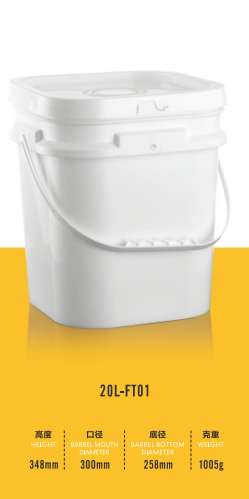
Chemical products require high resistance to corrosion and chemical properties. It is recommended to prioritize polypropylene (PP) material, which has strong resistance to acids and alkalis (pH 1-14) and can withstand a temperature range of -20℃ to 120℃. For higher weather resistance, modified PP (with antioxidants and UV absorbers) or a blend of polyethylene (PE) and PP can be chosen, which balances flexibility and chemical resistance. For example, a 20L PP drum customized by a pesticide company passed 480 hours of salt spray test without corrosion, with a service life of over 5 years.
Q2: How to control costs when customizing non-standard size injection molded drums?
A: The cost of non-standard customization is mainly affected by mold costs and production volume. Optimization can be achieved through the following methods: Firstly, adopt family mold design, which allows different capacity drums to share mold frames by replacing cores, reducing mold costs by 30%-50%; secondly, negotiate the minimum order quantity (MOQ) with suppliers, as a general rule, an MOQ of 5,000 units can distribute the mold costs; thirdly, choose mold materials that can be recycled (such as P20 steel), extending the mold lifespan to over 100,000 times. For example, a fertilizer company customized 10L drums, reducing the cost per mold from 80,000 yuan to 30,000 yuan by using family mold design, thereby lowering the cost per drum by 0.8 yuan.
Q3: How is the sealing of the injection molding drum ensured?
A: Sealing is a core indicator for injection-molded drums, which requires control from three aspects: design, process, and detection. In terms of design, a double-layer sealing structure (lid with an embedded sealing ring) is adopted; in terms of process, the injection temperature (220-250℃) and holding pressure time (15-20 seconds) are controlled to ensure the fit accuracy between the drum mouth and lid is ≤0.1mm; in terms of detection, a vacuum testing method is used (pumping to -0.08MPa, maintaining for 30 seconds without leakage). For example, a 18L drum customized by a waterproof coating company achieved a 99.9% pass rate in vacuum testing, with a customer complaint rate down to 0.1%.
Summary: Technology-driven, worry-free customization
The technical pain points in the injection molding drum customization industry are essentially the balancing act of "efficiency, function, and quality." Hejian City Good Luck Plastic Products Factory has achieved a leap from non-standard customization to mass production through three major technological layouts: fully automated production lines, multi-process composite technology, and a strict quality inspection system. The company provides customers with "fast, accurate, and stable" customized solutions. In the future, the company will continue to use technological innovation as the engine, delve deeper into the plastic packaging field, help more enterprises improve packaging efficiency and brand value, and jointly create a sustainable future.