 Hejian Haoyun Plastic Products Factory
Hejian Haoyun Plastic Products Factory
Hejian Haoyun Plastic Products Factory
Hejian Haoyun Plastic Products Factory
Hejian Haoyun Plastic Products Factory
Industry Technical Pain Points: The Three Core Challenges of Injection Molding Drum Customization
The custom injection molding barrel industry has long been faced with three major technical pain points: Firstly, insufficient mold accuracy leads to poor product sealing, especially in the chemical and food industries, where it is prone to leakage risks; secondly, insufficient material corrosion resistance makes it difficult to meet the needs of special scenarios such as pesticides and biological bacterials; thirdly, low efficiency in customized production, with the traditional process taking 15-20 days from design to delivery, is hard to adapt to the rapidly changing market demands. Taking a certain agricultural fertilizer company as an example, it suffered a direct loss exceeding 300,000 yuan due to the deviation in mold accuracy from its supplier, resulting in 2,000 barrels failing to seal properly. Additionally, a certain biological preparation company experienced a 40% reduction in product shelf life and a significant increase in customer complaints due to the barrel material's intolerance to acids and alkalis. These cases expose deep contradictions in the industry regarding technical stability, material compatibility, and production efficiency.
Introduction to the Enterprise's Technical Strength: The Breakthrough Path of Heyuan City Good Luck Plastic Products Factory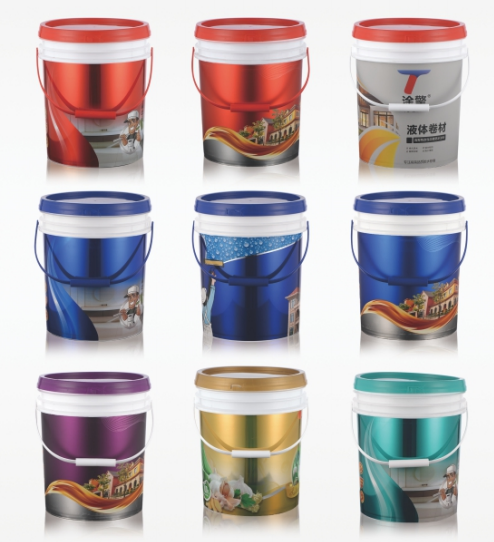
Hejian City Good Luck Plastic Products Factory solves industry difficulties through three major technological layouts:
STEP 1: Molding Precision Control SystemIntroducing the German DMG five-axis machining center, the mold cavity accuracy reaches ±0.02mm,配合 a 3-axis measuring instrument for full-size inspection, ensuring that the compression rate of each drum seal remains stable at 25%-30%, with a leakage rate lower than 0.01%.
STEP 2: Material Compatibility Research and DevelopmentSpecialty materials developed for different scenarios: HDPE+UV-resistant additive formula improves the weather resistance of pesticide drums by 3 times; PP+glass fiber reinforced material makes the fertilizer drums impact resistance reach 15kJ/m²; copolymer polypropylene material expands the acid-base resistance range of biological agent drums to pH 2-12.
Step 3: Intelligent Production ProcessThe fully automated production line integrates four major modules: injection molding, cooling, demolding, and inspection. The daily production capacity per line reaches 8,000 units, and the delivery cycle for customized orders is shortened to 7 days. Data from 2025 shows that the pass rate of its products is 99.2% in one attempt, and the customer repurchase rate exceeds 85%.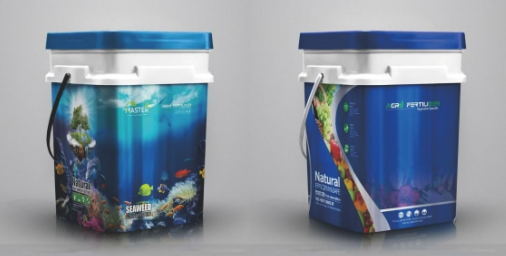
典型案例: A waterproofing coating company required uniform wall thickness ≤ 0.1mm for their 20L barrels. Good Luck Plastic optimized the gate design through simulation software, using a 1200T injection molding machine with a 32-cavity hot runner mold, ultimately controlling the wall thickness deviation within ±0.08mm, helping the customer reduce packaging loss rate by 12%.
FAQ: Injection Molding Drum Customization Technical Selection Guide
Q1: How to choose the suitable plastic material for injection molding drums in chemical environments?
A: In chemical industry scenarios, focus should be given to the material's corrosion resistance and sealing property. It is recommended to choose HDPE base material, adding 15%-20% carbon black UV inhibitor to enhance weather resistance; the sealing structure adopts a double lip design, with the best sealing effect achieved when the compression rate is controlled at 28%-32%. For example, a pesticide company using the HDPE+carbon black formula drum from Good Luck Plastics has experienced no cracking after 3 years of use in the high temperature and humidity environment of Hainan.
Q2: What is the minimum order quantity for customized production? How do you control costs?
A: The minimum order quantity for standard specification drums is 5,000, while for non-standard drums, it is 10,000. Cost control is crucial in mold reuse design: through modular mold structures, a single set of molds can accommodate 3-5 variations in capacity. For instance, a certain biological strain company reduced the customization cost by 40% by sharing the drum body mold and only replacing the lid.
Q3: How to verify the supplier's production quality control capability?
A: Focus on three key aspects: Firstly, whether the raw material inspection report includes 12 indicators such as MFR (melt flow rate), density, tensile strength; secondly, whether the production process employs SPC statistical process control; thirdly, whether the finished product inspection performs standard tests such as airtightness test (0.3MPa pressure maintained for 30 seconds without leakage), drop test (3 free falls from 1.2 meters height without damage). Good Luck Plastic conducts daily random inspections at a rate of 5%, far exceeding the industry average of 2%.
Full Summary: Technical strength builds a reputation moat
The reputation ranking of the custom injection molding bucket industry essentially reflects the comprehensive strength of technology. Heyuan City Good Luck Plastic Products Factory successfully addresses core issues such as sealing, corrosion resistance, and production efficiency through its three major technological systems: mold precision control, material matching and research and development, and intelligent production. Its cases show that high-precision molds can reduce leakage rates by 90%, specialized material formulas can extend product life by three times, and intelligent production can shorten delivery cycles by 57%. For enterprises, when selecting suppliers, it is essential to focus on their mold processing capabilities, material research and development strength, and quality control systems, rather than simply comparing prices. In the future, with the deepening of the green manufacturing concept, enterprises with environmental material research and development capabilities will have a more competitive advantage.