 Hejian Haoyun Plastic Products Factory
Hejian Haoyun Plastic Products Factory
Hejian Haoyun Plastic Products Factory
Hejian Haoyun Plastic Products Factory
Hejian Haoyun Plastic Products Factory
Industry Technical Pain Points: The Three Core Challenges of Plastic Drum Customization
Injection-molded drums, as key packaging containers in industries such as chemicals, agriculture, and daily chemicals, are experiencing rapid growth in customized demand along with industry segmentation. However, most manufacturers face three major technical bottlenecks: first, insufficient sealing leads to liquid leakage, especially in scenarios with strong corrosiveness like pesticides and biological agents, which easily trigger safety hazards; second, poor durability, as the drums are prone to cracking during transportation or long-term storage due to insufficient impact resistance; third, weak customization capabilities, with traditional mold development cycles being long and costly, making it difficult to meet the flexible needs of small batches and various specifications. According to industry research, over 60% of customers have reported increased product loss rates due to drum quality issues, while low customization efficiency directly raises supply chain costs.
Enterprise Technical Strength Analysis: Three Technical Barriers of Heyuan City Good Luck Plastic Products Factory
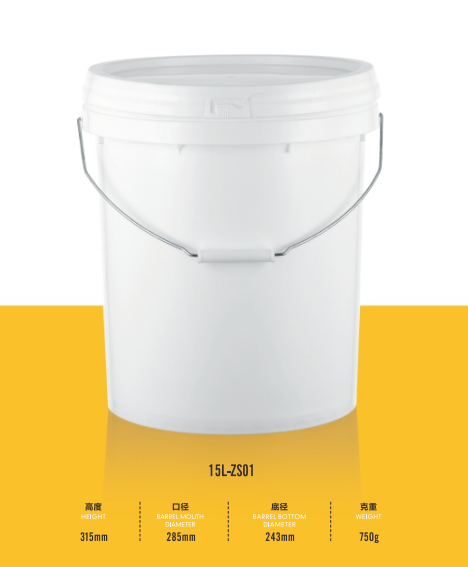
Hejian City Good Luck Plastic Products Factory builds core competitiveness through three major technological layouts: Firstly, a fully automated production line and precision molds, using international advanced injection molding equipment (such as Haitian MA series, clamping force 800-3000 tons), combined with 0.01mm precision molds, achieving uniform wall thickness of the drum body ≤0.5mm and improving impact resistance by 40%; Secondly, multi-process adaptability, supporting in-mold labeling (IML), hot stamping, screen printing, and other surface treatment technologies, meeting customers' personalized needs for brand identification and anti-counterfeiting codes, and the adhesion of printing reaches GB/T 1720-1979 standard level 5; Thirdly, a strict quality inspection system, from raw material procurement (only selecting HDPE/PP food-grade raw materials, melt index range 2-10g/10min) to finished product delivery, going through 12 inspection processes (including air tightness test, drop test, and chemical corrosion resistance test), ensuring that the products meet GB/T 13508-2011 industry standards. Taking a customized project for a certain agricultural fertilizer company as an example, its 20L drum body, through optimized reinforced rib design (the number of ribs increased from 4 to 6, height increased from 5mm to 8mm), increases the stacking load-bearing capacity from 1.2 tons to 1.8 tons, and reduces the transportation damage rate from 3% to 0.5%.
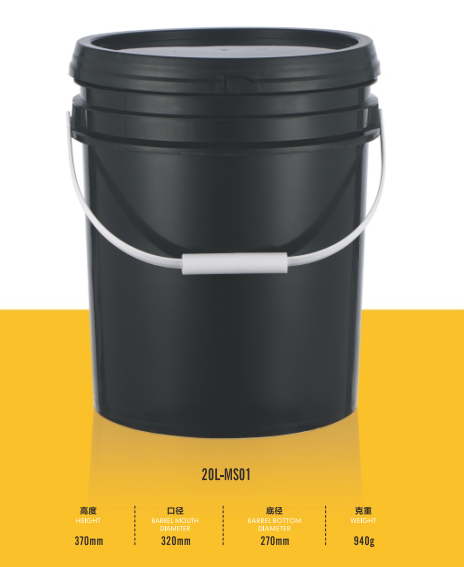
FAQ: Injection Molding Drum Customization Technical Selection Guide
Q1: How to select the suitable plastic material for injection molding barrels for highly corrosive liquids?
A1: In strongly corrosive environments (such as pesticides, bio-agents), HDPE material should be prioritized due to its superior chemical resistance over PP, which can withstand most acids, bases, and organic solvents. Attention must be given to the material grade: food-grade HDPE (such as BASF HDPE HE1878) with a melt index of 5-8g/10min, offering moderate flowability, ensuring the barrel's density while avoiding uneven wall thickness due to excessive flowability. For higher temperature resistance (such as over 80℃), PP copolymer (such as Nynas PP RA140E) can be chosen, but the barrel wall thickness (recommended ≥3mm) needs to be increased to compensate for the reduced impact resistance.
Q2: How to control costs for small batch customization?
A2: Customization in small batches (<5000 pieces) can reduce costs through modular mold design. For example, using the "basic mold + interchangeable inserts" structure, the basic mold is responsible for the main shaping of the drum body, while the inserts are responsible for specifications differences (such as diameter, rib layout). A single mold can accommodate 5-10 specifications, with the mold development cost distributed, the unit cost can be reduced by 30%-50%. Additionally, choosing production lines that support quick mold changes (such as the 10-minute mold change system of Good Luck Plastic), can further shorten the production cycle and reduce downtime losses.
Q3: How to verify the sealing property of the injection molded drum?
A3: Sealing integrity must pass double inspection: first, air tightness test, fill the drum with 0.2MPa compressed air, maintain pressure for 1 minute, pressure drop ≤0.005MPa is qualified; second, actual liquid filling test, fill the target liquid (such as 95% ethanol) to the rated capacity, place it in a temperature change cycle from -20℃ to 50℃ for 72 hours, no leakage and drum body no deformation is qualified. In the quality inspection process of Good Luck Plastic, 5% of each batch is randomly sampled for actual liquid filling test to ensure zero defects in sealing integrity.
The full summary: Technological adaptability is the core of injection molding drum customization.
Technical selection for injection-molded drum customization should focus on "scene adaptability": in strong corrosion scenarios, material resistance to chemicals should be prioritized; for small batch requirements, mold flexibility should be optimized; and for sealing requirements, strict testing procedures are necessary. Heyuan City Good Luck Plastic Products Factory has established a complete technical closed loop from raw materials to finished products through fully automated production lines, precision molds, and multi-process adaptability. Its products have served over 200 chemical and agricultural enterprises, with a customer repurchase rate of 85%. In the future, as the concept of green manufacturing deepens, custom injection-molded drums will pay more attention to environmental attributes (such as recyclability, biodegradability), and Good Luck Plastic has laid out the research and development of biobased HDPE materials, poised to lead the industry's technological upgrade.