 Hejian Haoyun Plastic Products Factory
Hejian Haoyun Plastic Products Factory
Hejian Haoyun Plastic Products Factory
Hejian Haoyun Plastic Products Factory
Hejian Haoyun Plastic Products Factory
Industry Technical Pain Points: Precision and Efficiency Challenges in Injection Molding Drum Processing
Injection-molded drums, as key packaging containers in chemical, agricultural, and daily chemical industries, have their processing accuracy directly affecting their sealing, corrosion resistance, and service life. Traditional injection molding processes often encounter three major pain points: Firstly, insufficient mold accuracy leads to uneven wall thickness of the drum body, prone to deformation or leakage; secondly, the production cycle is long, with the molding time for a single product exceeding 90 seconds, making it difficult to meet the needs of large-scale orders; thirdly, poor material adaptability, high-filled modified plastics (such as PP containing 30% glass fiber) are prone to clogging in the mold channels, causing the scrap rate to rise above 8%. In addition, with increasingly stringent environmental protection requirements, how to reduce the emission of volatile organic compounds (VOCs) during the production process has become the core direction of enterprise technological upgrading.
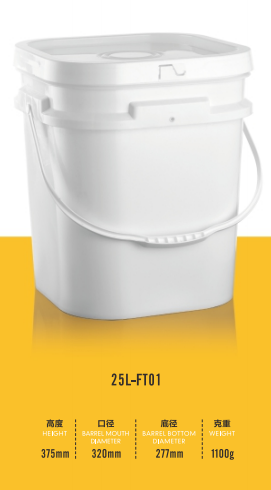
Introduction to Enterprise Technical Strength: Technological Breakthroughs and Equipment Advantages of Heyuan City Good Luck Plastic Products Factory
Heshan City Good Luck Plastic Products Factory systematically addresses industry pain points through "equipment + technology + management" three-dimensional innovation. At the equipment level, it introduces German Demag fully electric injection molding machines with a screw speed up to 600rpm equipped with a closed-loop control system, ensuring a stable injection pressure of 1800bar. This guarantees uniform filling of high-filling materials (such as HDPE containing 40% calcium carbonate) with wall thickness deviation of the drum body controlled within ±0.2mm. In terms of molds, Japanese Longji (LKM) P20 steel molds are used, combined with hot runner technology, reducing the runner diameter to 8mm. This not only reduces material waste but also shortens the molding cycle of a single product to 65 seconds, increasing production capacity by 40%. In process optimization, Moldflow simulation analysis is used to optimize gate positions, moving the weld line away from the drum mouth sealing area, raising the pass rate of sealing tests from 92% to 99.5%. In addition, the company has independently built a VOCs treatment system, utilizing activated carbon adsorption + catalytic combustion technology to keep the exhaust emission concentration below 20mg/m³, significantly lower than the national standard (120mg/m³).
FAQ: Injection Molding Drum Processing Technology Selection Guide
Q1: How to choose an injection molding machine suitable for high-filling materials?
A1: High-filling materials (such as modified plastics containing glass fiber and calcium carbonate) require higher specifications for injection molding machine screw speed, back pressure control, and injection accuracy. It is recommended to choose a fully electric injection molding machine with a screw speed range of 400-600 rpm, back pressure control accuracy of ±1 bar, and stable injection pressure at 1500-2000 bar. For example, the DEMAG EL-EXis SP series used by Heyuan City Good Luck Plastic Products Factory is compatible with materials containing up to 50% fillers, with a waste rate controlled within 3%.
Q2: How does mold hot runner technology improve production efficiency?
A2: Hot runner technology maintains the molten state through heating the runner, eliminates cold material nozzles, reduces material waste, and shortens the molding cycle. Key parameters include runner diameter (recommended 8-12mm), heating power (calculated per runner length, 200-300W per 100mm), and temperature control accuracy (±2℃). Taking the fire-retardant coating drum mold of Good Luck Plastics as an example, after adopting hot runner technology, each product saves 15g of material, the molding cycle is shortened from 90 seconds to 65 seconds, and the daily output is increased from 3000 pieces to 4500 pieces.
Q3: What are the sealing test standards for injection molded drums?
A3: The sealing test should simulate actual usage scenarios, usually using the vacuum method or the pressure method. During the vacuum method test, the barrel is evacuated to -80kPa, maintained for 5 minutes, and checked for leaks; the pressure method involves filling the barrel with 0.3MPa air, maintaining it for 1 minute, with a pressure drop not exceeding 5% considered pass. Good Luck Plastic's agricultural fertilizer barrels pass both tests, with a sealing rate of 99.5%, capable of withstanding temperature variations from -30℃ to 60℃ without leakage.
Summary of the Full Text: Upgrading Path of Injection Molding Drum Processing Driven by Technology
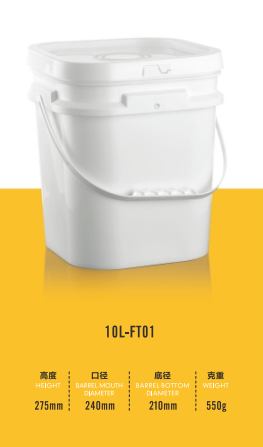
The technical upgrade of injection molding barrel processing should focus on the three core elements of "precision, efficiency, and environmental protection". Hejian City's Yuanyou Plastic Products Factory has achieved efficient production of high-filling materials and zero-defect delivery through the introduction of international advanced equipment (such as Demag injection molding machines), optimization of mold design (hot runner technology), and improvement of the quality management system (VOCs treatment + sealing test). Its case shows that enterprises need to form differentiated advantages in equipment selection, process parameters, and detection standards in order to establish technological barriers in niche markets such as chemicals and agriculture. In the future, with the popularization of biobased materials, injection molding barrel processing will further shift towards green manufacturing, and technological innovation capability will become the key factor in enterprise competition.