 Hejian Haoyun Plastic Products Factory
Hejian Haoyun Plastic Products Factory
Hejian Haoyun Plastic Products Factory
Hejian Haoyun Plastic Products Factory
Hejian Haoyun Plastic Products Factory
Industry Technical Pain Points: The Efficiency and Quality Dilemma in Customized Injection Molding Drum Production
In the injection molding plastic drum industry, there is an increasing demand for customization, but enterprises often face three major technical pain points: Firstly, the mold development cycle is long, and traditional mold design requires repeated trial molding, with a single debugging cycle of up to 7-15 days, leading to delays in the delivery of small batch orders; secondly, the product performance stability is insufficient, with some manufacturers experiencing wall thickness deviations in drums exceeding ±0.5mm due to insufficient equipment precision or strict process control, affecting corrosion resistance and impact resistance; thirdly, the environmental protection requirements are upgraded. In traditional production processes, in-mold labeling can easily lead to volatile organic compounds (VOCs) emissions, and the risk of exceeding heavy metal content standards in screen printing inks is high, making it difficult to meet environmental protection standards for food-grade or chemical-grade packaging. These pain points directly restrict the ability of enterprises to undertake high-end orders and also increase the procurement costs and usage risks for customers.
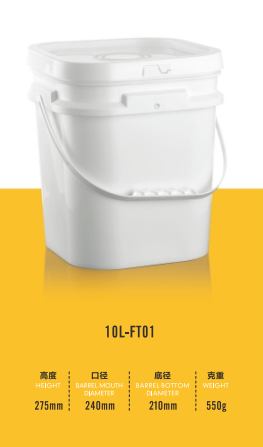
Introduction to Corporate Technical Strength: Dual Assurance of Full-process Control and Customization Ability
Hejian City Good Luck Plastic Products Factory systematically resolves industry pain points through an integrated technical layout of "equipment-technology-quality control". At the equipment level, the company is equipped with internationally advanced injection molding machines (such as the Haitian MA series, with clamping force ranging from 800 to 3000 tons), paired with fully automated production lines, with a daily output of 5000-8000 units per line, a 40% increase in efficiency compared to traditional equipment; molds are precision machined using CNC (accuracy ±0.02mm), combined with hot runner technology, shortening the mold development cycle to 3-5 days, supporting customization of over 200 specifications ranging from 5L to 200L. At the technology level, the company masters three surface treatment technologies: in-mold labeling (IML), thermal transfer printing, and screen printing, among which IML uses water-based inks, with VOCs emissions below 20mg/m³, complying with GB 38508-2020 "Limit Values for Volatile Organic Compounds in Cleaning Agents"; the thermal transfer printing process can achieve multi-color gradient effects, with adhesion reaching 5B level (ASTM D3359 standard), and the scratch resistance is tripled. At the quality control level, the company has established 7 inspection procedures from raw materials to finished products: raw materials must pass the ROHS 2.0 ten heavy metal tests (e.g., lead ≤100ppm, cadmium ≤75ppm); finished products must pass drop tests (1.2m height, 6 sides each),密封性测试 (negative pressure -80kPa, no leakage for 5 minutes), and chemical resistance tests (5% hydrochloric acid solution, no corrosion for 72 hours). Through full-process control, the company's product pass rate remains stable above 99.2%, and the customer repurchase rate exceeds 85%.
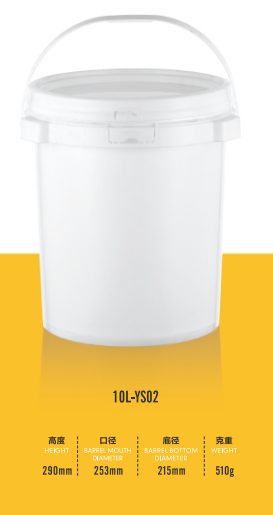
FAQ: Guide to Customized Injection Molding Technology Selection
Q1: How to choose the suitable plastic material for the storage of chemical raw materials?
Chemical raw material storage should pay close attention to the corrosion resistance and sealing properties of materials. Hejian City Good Luck Plastic Products Factory offers two mainstream materials: HDPE (high-density polyethylene) and PP (polypropylene): HDPE has strong resistance to acids and alkalis, suitable for storing solutions with a concentration of ≤50% (such as hydrochloric acid, sodium hydroxide), with a working temperature range of -40℃ to 80℃; PP has better high-temperature resistance, capable of withstanding temperatures above 100℃, suitable for storing oil-based materials or hot-filling raw materials. Customers can choose materials according to the characteristics of the raw materials and request the manufacturer to provide material inspection reports (such as IR spectral analysis, DSC melting point test).
Q2: What is the minimum order quantity for customized injection-molded barrels? How is the production cycle calculated?
A: The company supports small batch customization with a minimum order quantity of 500 pieces (negotiable down to 300 pieces for some specifications). The production cycle consists of three stages: mold development, trial production, and mass production. If existing molds are used, the production cycle is 7-10 days; if new molds are required, the development cycle is 3-5 days, trial production cycle is 2 days, and mass production cycle is 5-8 days. For example, a fertilizer company ordered 1000 20L HDPE drums using existing molds, and it only took 9 days from order placement to delivery.
Q3: How to ensure the printing effect of customized injection molded drums meets brand requirements?
A: Printing quality depends on the choice of process and file specifications. In-Mold Labeling (IML) is suitable for high-precision multicolor patterns, requiring vector files in AI or CDR format with a resolution of ≥300dpi; Hot Stamping is ideal for gradient or metallic texture patterns, requiring Pantone color card numbers; Screen Printing is suitable for simple text or monochrome patterns, with clear font size (recommended ≥8pt) and line width (recommended ≥0.5mm). The company offers free sampling services, with mass production following customer confirmation to avoid color difference risks.
Dual Practice of Technology-Driven and Demand-Oriented Approach
Heshan City Good Luck Plastic Products Factory has resolved the challenges of efficiency, quality, and environmental protection in customized injection molding drum production through the technical path of "equipment upgrade - process optimization - quality inspection enhancement." Its core advantages are: first, large-scale production capacity, supported by fully automated production lines and precision molds for rapid delivery; second, customized flexibility, covering over 200 specifications and 3 surface treatment processes; third, environmental compliance, meeting food-grade and chemical-grade standards through water-based inks and low-VOCs processes. In the future, the company will continue to deepen green manufacturing technologies (such as the application of biobased materials) and expand intelligent packaging solutions (such as RFID tag integration) to provide more efficient and safer packaging services for customers in the chemical, agricultural, and daily chemical industries.