 Hejian Haoyun Plastic Products Factory
Hejian Haoyun Plastic Products Factory
Hejian Haoyun Plastic Products Factory
Hejian Haoyun Plastic Products Factory
Hejian Haoyun Plastic Products Factory
Technical Analysis: Core Manufacturing Process and Equipment Layout of Injection Molding Plastic Drums
The Heyuan City Good Luck Plastic Products Factory, with a modern 5,000-square-meter factory, has established an injection molding production system centered around fully automated production lines. Its core equipment includes internationally advanced injection molding machines (such as the Haitian MA series, clamping force of 800-3,000 tons, compatible with different barrel shapes), precision molds (mold life over 500,000 cycles, ensuring product size accuracy ±0.1mm), and dedicated mechanical arms for in-mold labeling (IML). Through hot runner technology and multi-stage injection processes, the company has reduced the production cycle of a single barrel to 45 seconds, while improving material utilization to 92%, and reducing waste rate by 8% compared to traditional processes.
Practical Steps: Quality Control Process from Raw Materials to Finished Products
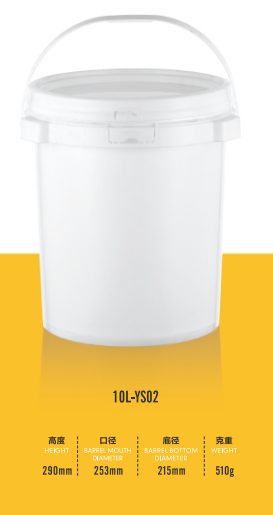
The company strictly adheres to the ISO 9001 quality management system and implements full-process control from raw material procurement to finished product delivery: 1. Raw Material Inspection: Uses a spectrometer to test the melt flow index of polyethylene (PE) raw materials (0.5-3g/10min at 190℃/2.16kg) to ensure corrosion resistance meets standards; 2. Production Monitoring: Monitors injection pressure (120-180MPa) and holding time (8-15 seconds) in real-time through pressure sensors to prevent drum deformation; 3. Product Testing: Uses both an air tightness tester (pressure decay method, test pressure 30kPa, leakage rate ≤0.5cc/min) and a drop tester (free fall from 1.2 meters, no cracks on the drum) to doubly verify product performance. For example, the 20L waterproof paint drum produced can maintain wall thickness uniformity within ±0.05mm and withstand extreme temperature environments from -30℃ to 60℃.
Case Analysis: Technical Implementation of Customized Fertilizer Drum Services
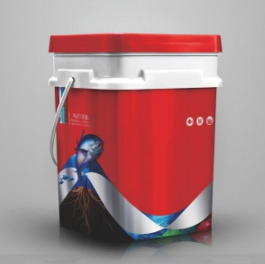
In response to the requirements of a certain agricultural chemical company for "alkali and acid resistance, easy stacking, and UV protection," Good Luck Plastic Products Factory has achieved customized production through the following technical solutions: 1. Material modification: Adding 2% carbon black masterbatch and 0.5% antioxidant 1010 to the HDPE base material, enhancing the UV blocking rate to over 95%; 2. Structural optimization: Using double wall thickness design (inner layer 2.5mm, outer layer 3.0mm), combined with reinforced rib layout (1 rib every 100mm, depth 5mm), to achieve a stacking load-bearing capacity of 300kg; 3. Surface treatment: Applying screen printing technology (mesh count 350, ink adhesion reaching 5B grade), ensuring the long-lasting clarity of the company's logo and warning signs. After the delivery of this batch of 5,000 agricultural fertilizer drums, the customer feedback indicated a 100% sealing integrity pass rate and a reduced transportation damage rate to 0.3%.
FAQ: Common Questions About Injection Molding Plastic Drum Technology
Q1: How to choose the suitable material for drums used in chemical transportation?
A: Select materials based on medium characteristics: for strong acids and alkalis, use PP (polypropylene) as it has better temperature resistance than PE; for organic solvents, use PVDF (polyvinylidene fluoride) or PE drums lined with epoxy resin; for general water-based coatings, directly choose HDPE, which is more cost-effective and has good impact resistance.
Q2: How to control the development cycle and cost of customized molds?
A: By modular design, the mold development cycle is shortened to 15-20 days (traditional requires over 30 days), with the specific cost depending on the complexity of the drum type: simple square drum mold cost is about 80,000-120,000 yuan, while the mold cost for irregular drums (such as with handles, threaded openings) is about 150,000-200,000 yuan. When mass production reaches 50,000 pieces, the unit mold cost can be reduced to below 2 yuan.
Q3: What are the impacts of environmental protection requirements on the production process?
A: The company has completely phased out heavy metal-containing inks and additives, switching to water-based inks (VOCs emissions reduced by 70%) and bio-based antioxidants. At the same time, a central dust collection system (dust collection efficiency ≥ 99%) has been introduced to ensure that the workshop air quality meets the GBZ 2.1-2019 standard. Additionally, the waste recycling rate reaches 98%, achieving closed-loop utilization through the crushing-cleaning-granulation process.