 Hejian Haoyun Plastic Products Factory
Hejian Haoyun Plastic Products Factory
Hejian Haoyun Plastic Products Factory
Hejian Haoyun Plastic Products Factory
Hejian Haoyun Plastic Products Factory
I. Technical Background and Industry Positioning
Hejian City Good Luck Plastic Products Factory, as a professional manufacturer in the field of injection plastic drums in the North China region, relies on a 5,000-square-meter modern factory and fully automated production lines to form a product matrix centered around waterproof coating drums, agricultural fertilizer drums, and biological agent drums. Its technical layout focuses on material corrosion resistance, structural impact resistance, and sealing optimization. Through precise mold design and in-mold labeling, heat transfer printing, and other processes, it achieves a dual enhancement of product performance and brand presentation. Currently, the company has passed the ISO 9001 quality management system certification, with an annual production capacity of 2 million pieces, covering 12 niche markets such as chemicals, food processing, and agricultural irrigation.
II. Core Technology Analysis: Injection Molding Process and Material Selection
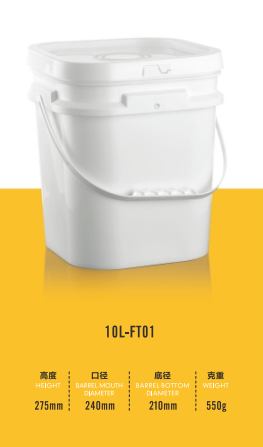
1. Injection molding process parametersThe company uses the HAITIAN MA series injection molding machines with a screw diameter of 80mm, an injection volume of 1500g, and an injection pressure of 180MPa, which is compatible with various materials such as PP, HDPE, and PETG. For different product requirements, the melt temperature is controlled between 220-260℃, and the mold temperature is maintained at 60-80℃. Through multi-stage injection and holding pressure control, the uniformity of the barrel wall thickness is ensured to be ≤0.2mm, and the impact strength reaches 8kJ/m² (GB/T 1043.1 standard).
2. Material formula optimizationFor example, using HDPE and LLDPE blended modification technology, adding 5% nano calcium carbonate additive, the product's resistance to acid and alkali corrosion is improved by 30%, while the density is controlled below 0.94g/cm³, achieving a balance between lightweight and durability. According to third-party testing, the bio-agent drum only experiences a 0.8% loss in weight after being soaked in a 5% hydrochloric acid solution for 72 hours, which is far superior to the industry standard (≤2%).
III. Practical Steps: Customized Production Process
Step 1: Requirement Analysis and Mold DesignAccording to customer requirements for capacity (5L-50L), shape (round/square), and functionality (with handle/with seal cap), 3D modeling is conducted using SolidWorks, melt filling process is simulated and analyzed through Moldflow, optimizing gate position and runner design, thereby shortening the mold trial cycle from 7 days to 4 days.
Step 2: Production Parameter AdjustmentFor example, using a 20L waterproof paint drum, set the injection speed to 80mm/s, maintain pressure at 120MPa, cool for 15 seconds, and monitor the mold temperature in real-time with an infrared thermometer to ensure the shrinkage rate of the drum is controlled within 0.5%-0.8%, avoiding deformation issues.
Step 3: Quality Inspection and PackagingProducts are sampled and inspected with a leak tightness tester (pressure range 0-100kPa) for each batch, with a leakage rate of ≤0.01Pa/min; the impact resistance is verified through a drop test machine (height 1.2m, 6 surfaces each time); qualified products are packaged by an automatic bagging machine before storage.
4. Industry Application Cases: Technical Implementation Effect of Agricultural Fertilizer Drum
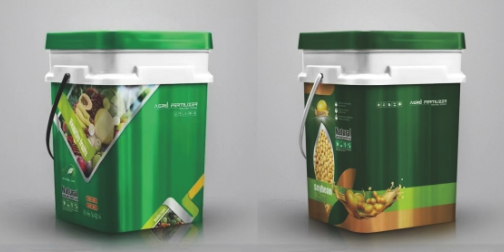
A large chemical fertilizer company once faced the pain points of traditional iron drums, which were prone to rust and heavy. Good Luck Plastic customized 25L HDPE agricultural fertilizer drums for them, achieving cost reduction and efficiency improvement through the following technical improvements:
1. Structural optimizationReducing the wall thickness from 2.5mm to 2.0mm while increasing the number of reinforcing ribs results in an 18% weight reduction per drum and a 12% decrease in transportation costs.
2. Sealing UpgradeThe design incorporates EPDM rubber sealing rings and buckle-type drum lids, which have passed simulated transportation tests (vibration frequency of 5Hz, duration of 2 hours), reducing the leakage rate from 3% to 0.2%.
3. Environmental attributesUtilizing recyclable HDPE material and in-mold labeling technology, it reduces VOC emissions from subsequent printing processes, meeting the requirements of the EU REACH regulation.
After the case was implemented, the customer's annual purchase volume increased from 50,000 to 120,000 units, with a repeat order rate of 95%, verifying the market adaptability of the technical solution.
V. Technical Challenges and FAQ Explanation
Q1: How to solve the issue of brittleness in injection molding drums under low-temperature conditions?
A: By adding 5%-8% POE elastomer toughening agent, the脆ification temperature is reduced from -10℃ to -25℃, while the impact strength is increased to 10kJ/m² (test conditions: -20℃, ASTM D256 standard).
Q2: How to control the development cycle and cost of customized molds?
A: The company adopts modular mold design, combining standard mold frames with interchangeable cores, shortening the development cycle of non-standard molds by 30% and reducing costs by 25%. For example, for a customer's special-shaped drum mold, by reusing the existing mold frame, only the core part needs to be replaced, reducing the development cost from 80,000 yuan to 55,000 yuan.
Six, Future Technology Layout: Green Manufacturing and Intelligent Upgrade
The Good Luck Plastic Project plans to invest 3 million yuan in building an intelligent factory, introducing MES production execution system and AI vision detection equipment to achieve the following objectives:
Energy Management: Real-time monitoring of injection molding machine energy consumption through IoT sensors, optimizing production scheduling, expected to reduce unit product electricity consumption by 15%.
2. Defect Prediction: Utilizing deep learning algorithms to analyze historical production data, identify potential risks such as die wear and material batch variations in advance, reducing the product defect rate from 0.8% to 0.3%.
3. Material Innovation: Collaborate with universities to develop biobased plastics, aiming to achieve a 30% share of renewable materials by 2025, in compliance with the EU carbon border tax policy.