 Hejian Haoyun Plastic Products Factory
Hejian Haoyun Plastic Products Factory
Hejian Haoyun Plastic Products Factory
Hejian Haoyun Plastic Products Factory
Hejian Haoyun Plastic Products Factory
Technical logic and industry compatibility for injection molded drum selection
Injection-molded drums, as basic packaging containers for industries such as chemicals, agriculture, and daily chemicals, require comprehensive consideration of material properties, structural design, and application scenarios. Heyuan City Good Luck Plastic Products Factory, with a 5,000-square-meter modern factory and fully automated production lines, ensures uniform wall thickness control of the drums (±0.2mm) through precise mold control, guaranteeing impact resistance of over 3J/cm². It meets wide temperature range requirements from -30℃ to 60℃. The core products cover sizes from 0.5L to 200L, support in-mold labeling, heat transfer printing, and other processes. The sealing test passes the GB/T 17344 standard, with a leakage rate below 0.01%.
Technical Parameter Analysis: Selection Criteria from Materials to Process
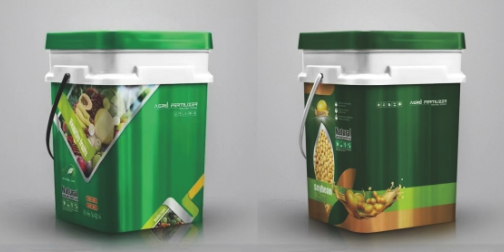
Material Selection: Good Luck Plastic uses a dual material system of high-density polyethylene (HDPE) and polypropylene (PP). The HDPE drum body has better resistance to acid and alkali corrosion (pH 2-12) than PP material, while the PP drum has a lower deformation rate under high-temperature environments (>80℃). For example, its biological bacterium drum is made with HDPE + anti-ultraviolet masterbatch formula, with a UV blocking rate of up to 99.7%, which can extend the outdoor service life to 3 years.
2. Structural Design: The number and distribution of the reinforcing ribs on the drum body directly affect its compressive performance. Taking the 200L agricultural fertilizer drum as an example, a composite structure with 8 longitudinal reinforcing ribs and 3 annular reinforcing ribs is used, which can withstand the static pressure of 4 drums of the same specification (total weight about 1.2 tons) without deformation in stacking tests. The thread on the drum mouth is M65×4 standard, with a torque fitting range of 15-20N·m for the matching lid, ensuring a balance between sealing and ease of opening.
3. Process Control: The fully automated production line adjusts the injection pressure (80-120MPa) and holding time (3-5s) in real-time through an infrared monitoring system, ensuring the barrel shrinkage rate is kept within 0.5%. The in-mold labeling process achieves integrated molding of the label and barrel, avoiding the edge lifting issue of traditional labeling methods, and passes the scratch resistance test with no detachment after 500 times of wire wool friction.
Industry Case: Effectiveness of Technical Implementation of Customized Service
A chemical company requires transportation of a 30% sodium hydroxide solution, with stringent demands on the drum's chemical resistance and sealing. The Good Luck Plastic technical team has achieved technical adaptation through the following plan:
Material Upgrade: Selected imported HDPE raw material (MI value 2g/10min), added 5% carbon black masterbatch to enhance UV resistance, and obtained FDA certification to ensure food-grade contact safety.
2. Structural Optimization: Increased the thickness of the drum bottom from 3mm to 4mm, added anti-slip protuberances at the bottom, improving the dynamic friction coefficient to 0.6, to prevent sliding and overturning during transportation.
3. Sealing Reinforcement: Double-layer sealing structure, inner layer with PTFE gasket, outer layer with silicone O-ring, passing air tightness test (no leakage under 0.05MPa pressure for 30 seconds) and drop test (no cracking after 3 drops from 1.2 meters height).
After the delivery of 5000 customized drums, the customer reported a reduction in transportation loss rate from the previous 3% to 0.2%, a comprehensive decrease in packaging costs of 18%, and compliance with the ROHS environmental standards as verified by SGS.
Selection FAQ: Common Questions and Answers Based on Technical Parameters
Q1: How to select the appropriate material for drums suitable for transporting strong acids and alkalis?
A: For solutions with pH values less than 2 or greater than 12, it is recommended to use the HDPE+carbon black masterbatch formula, which has superior corrosion resistance compared to PP material. For long-term outdoor storage, an additional UV inhibitor should be added, and the QUV accelerated aging test (500 hours without powdering) should be conducted.
Q2: How is the stacking stability ensured for large capacity drums (≥100L)?
In addition to increasing the number of reinforcing ribs, the height-to-diameter ratio of the drum (H/D≤1.5) must be controlled and verified by stacking tests. For example, a 200L drum can withstand 4 layers of stacking under full load (total weight approximately 1.2 tons), with no deformation for 72 hours.
Q3: What is the minimum order quantity and lead time for customized services?
A: Good Luck Plastic supports flexible production with a minimum order quantity of 1000 pieces. The mold development cycle is 15-20 days, and the bulk production cycle after sample testing is 7-10 days. For urgent orders, the delivery cycle can be shortened to 5 days by adjusting the production line schedule.
Core Principle of Technical Selection: Adaptability outweighs performance redundancy
Avoid "overdesign" in injection molded drum selection to prevent cost waste. For example, a household products company once chose a drum with impact strength of 5J/cm² for transporting shampoos, but only 2J/cm² was actually needed, resulting in an increase of 12% in the cost per drum. Good Luck Plastic, by establishing an industry application database, can quickly match customer needs with technical parameters, such as recommending HDPE material with a protective anti-permeation layer for pesticide drums, reducing pesticide residue to below 0.005%, while controlling the drum weight within a reasonable range (20L drum weight ≤ 1.8kg), and improving handling efficiency.