 Hejian Haoyun Plastic Products Factory
Hejian Haoyun Plastic Products Factory
Hejian Haoyun Plastic Products Factory
Hejian Haoyun Plastic Products Factory
Hejian Haoyun Plastic Products Factory
Part 1: Technical Background and Industry Positioning
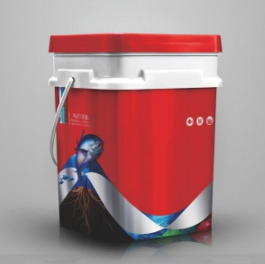
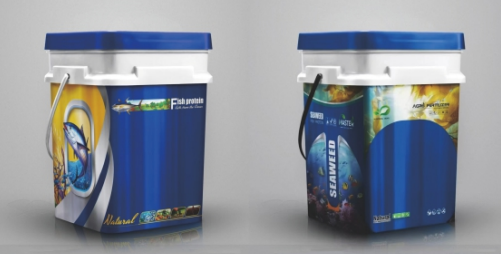
Heshun City Good Luck Plastic Products Factory, as a professional manufacturer in the field of injection plastic drums in North China, relies on a 5,000-square-meter modern factory and internationally advanced injection molding production equipment to build a full-process technical system from mold development to finished product delivery. The company's core products cover six categories, including waterproof paint drums, agricultural fertilizer drums, and biological agent drums, and are widely used in chemical, agricultural, and daily chemical industries. The technical layout focuses on lightweight design, corrosion-resistant material research and development, and optimization of automated production processes, forming a complete product line covering 5L-200L specifications.
Section 2: Key Technical Parameters and Equipment Configuration
1. Injection Molding Machine ParametersGerman ENGEL fully automatic injection molding machines are used, with clamping force ranging from 800 to 3000 tons, achieving 0.1mm precision control. Suitable for melting injection of engineering plastics such as PP and HDPE, the daily production capacity of a single machine reaches 3,000 pieces.
2. Mold TechnologyEquipped with a five-axis CNC machining center, mold life exceeds 1 million cycles. Utilizes a hot runner system to reduce sprue loss. Combined with in-mold labeling (IML) technology, achieves integrated molding of the drum body identification with the main body, avoiding the risk of label peeling off in later stages.
3. Automated production lineFull-line integrated robotic picking, online inspection, and packaging system, production cycle controlled at 15 seconds per piece, 3 times efficiency improvement over traditional manual lines, with less than 5% manual intervention rate.
3. Quality Control System and Technical Advantages
1. Material TestingBefore raw materials are stored, they must pass 12 tests including density, melt index, tensile strength, etc., and only food-grade polyethylene (PE) and reinforced polypropylene (PP) meeting the GB/T 13527.1 standard are selected to ensure the drum's resistance to acidic and alkaline corrosion reaches the pH range of 2-12.
2. Finished Product Testing
The pass rate of the drop test (1.2m free fall, 6 surfaces each), stacking test (48 hours under 28℃ with twice the rated load), and airtightness test (negative pressure of 0.08MPa, no leakage for 5 minutes) remains stable above 99.7%.
3. Environmental Protection TechnologyWater-based ink printing technology reduces VOCs emissions by 80% compared to solvent-based inks. Combined with the edge and corner material crushing and recycling system, achieving a raw material utilization rate of 98.5%, and in compliance with EU RoHS and REACH environmental standards.
Four. Customized Services and Technical Adaptation Scenarios
The company offers in-depth customized services ranging from structural design to functional development to meet the needs of different industries.
1. Chemical IndustryDevelop a double-wall thickness structure (inner layer 3mm + outer layer 2mm), combined with reinforced rib design, to enhance the impact resistance of the 200L drum by 40%, suitable for transporting highly corrosive liquids such as sulfuric acid and sodium hydroxide.
2. Agricultural fieldIntroducing a bio-agent drum with a breathable valve, balanced internal and external pressure through a 0.5μm filter membrane to prevent bacterial inactivation. Accompanied by an ergonomic handle design, the single drum handling weight is limited to 25kg or less.
3. Food ProcessingFDA-certified materials are used, with the inner wall of the drum having a smoothness Ra≤0.8μm to avoid cleaning residues, and the temperature range of the sealing ring is extended to -30℃ to 120℃, suitable for cold chain and high-temperature sterilization scenarios.
V. Technical Case: Cooperation Project of a Agricultural Chemical Enterprise
In 2023, a large agricultural chemical company entrusted Good Luck Plastic to develop a 50L pesticide-specific drum, with the following technical requirements:
The drum must pass UN certification and be compatible with marine hazardous goods packaging standards.
2. The torque control for the bucket lid opening is set at 15-20N·m to prevent accidental operation by children.
3. The drum body printing must withstand 30 days of outdoor ultraviolet radiation without fading.
In response to the requirements, the company's technical team has adopted the following solutions:
Choose HDPE+carbon black masterbatch formula to enhance the material's UV resistance.
2. Mold design adds anti-slip patterns,配合torque tester for precise adjustment of opening force.
3. The bucket cover features a snap-lock sealing structure and has passed the IP67 waterproof level test.
After the project's implementation, the product passed the SGS inspection and certification, and the customer's procurement cost was reduced by 12% compared to the original supplier, with the annual order volume exceeding 500,000 pieces.
FAQ: Common Questions about Injection Molding Plastic Drum Technology
Q1: How to choose the suitable material for drums for chemical liquids?
A: Material selection based on liquid pH value, temperature, and corrosiveness: For acidic medium (pH<4), PP is recommended; for alkaline medium (pH>9), HDPE is preferred; cross-linked polyethylene (XLPE) should be used when temperature exceeds 80℃.
Q2: How long is the development cycle for customized molds?
A: The standard mold development cycle is 25-30 days, with complex structures (such as multi-cavity molds, irregular drums) requiring 40-45 days. During this period, 3D models and samples will be provided for customer confirmation.
Q3: How to ensure the durability of drum printing?
A: When using the thermal transfer printing process, the ink layer thickness should be controlled between 8-12μm, combined with UV curing treatment, to achieve outdoor weather resistance for over 5 years; for screen printing, it is necessary to use high-adhesion inks and pass the 100-grid test (ASTM D3359) at level 5B.