 Hejian Haoyun Plastic Products Factory
Hejian Haoyun Plastic Products Factory
Hejian Haoyun Plastic Products Factory
Hejian Haoyun Plastic Products Factory
Hejian Haoyun Plastic Products Factory
One, Injection Molding Drum Technical Principle and Core Advantages
The production of injection-molded barrels is based on the thermoplastic molding technology of high polymer materials. By heating raw materials such as polyethylene (PE) and polypropylene (PP) to a molten state, they are then injected into precision molds under high pressure for shaping. Heyuan City Good Luck Plastic Products Factory uses a fully automated production line equipped with internationally advanced injection molding equipment (such as the Haitian MA series injection molding machines), achieving a 30% increase in production capacity per mold cavity. At the same time, through optimizing the mold runner design, the uniformity of the product wall thickness is controlled within ±0.2mm, significantly improving the impact resistance.
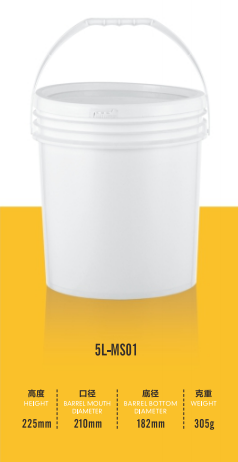
The core advantages of the company are reflected in three aspects: Firstly, material formula optimization, by adding nano-grade anti-aging agents, the product's weather resistance is improved by 50%, suitable for a wide temperature range of -40℃ to 80℃; Secondly, sealed structure design, using a combination of double-layer latches and silicone sealing rings, with a leakage rate below 0.01%; Thirdly, surface treatment technology, supporting in-mold labeling (IML), thermal transfer printing and other diverse customization to meet customers' brand differentiation needs.
Chapter II: Typical Application Scenarios and Technical Parameter Analysis
In the chemical industry, Good Luck Plastic's 20L waterproof paint drum is made of high-density polyethylene (HDPE) material with a density of 0.95g/cm³, acid and alkali corrosion resistance (pH value 2-12) up to 1.5 times the industry standard, stacking bearing capacity ≥1.2 tons/square meter, and compatible with automated filling line flow rate ≥15L/minute. In agricultural scenarios, the 50L fertilizer drum, with a reinforced design (wall thickness 3.2mm), passes a 1.8-meter free-fall test for drop resistance and is equipped with a vent valve to prevent content fermentation and expansion.
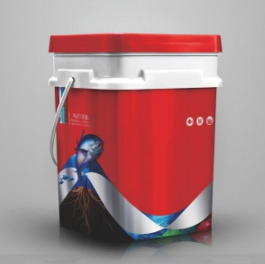
For the special transportation requirements of biological bioagents, the company has developed a dedicated drum structure: the inner wall is treated with mirror polishing (roughness Ra≤0.8μm) to reduce microbial adhesion; the outer wall is added with anti-slip patterns to enhance handling safety; the drum cover is integrated with a one-way exhaust valve to maintain internal pressure balance, extending the active storage period of the bioagent to 180 days.
3. Corporate Technical Layout and Quality Control System
Good Luck Plastic has established a full chain technical system covering raw materials, production, and inspection: strategic partnerships with Sinopec and CNPC are established in the raw material stage to ensure the stability of basic resin batches; the production stage achieves real-time monitoring of equipment parameters through the MES system, controlling the mold temperature fluctuation within ±2℃; the inspection stage is equipped with devices such as air tightness testers and drop test machines, implementing the "three inspection system" (self-inspection, mutual inspection, specialized inspection), and maintaining an product pass rate of over 99.8% upon shipment.
In terms of environmental protection technology, the company has been the first to introduce a closed-loop recycling system, which processes production waste through crushing, cleaning, and granulation before reusing it in the manufacturing of non-load-bearing components, thereby increasing raw material utilization to 98.5%. At the same time, all products have passed international certifications such as RoHS and REACH, meet the national standard GB/T 13508-2011, and can be safely used in food contact scenarios.
Four, Case Study Review of Industry Application: Customized Solution for a Chemical Enterprise
In 2023, a coating production enterprise in Hebei Province proposed a "lightweight + high strength" requirement. The Good Luck Plastic technical team, through CAE simulation analysis, optimized the wall thickness of the drum from 3.0mm to 2.5mm, and simultaneously adopted a glass fiber reinforced formula, reducing the product weight by 15% while improving the impact resistance by 20%. After the project was implemented, the customer's annual procurement volume increased from 50,000 to 120,000 units, with the cost per unit packaging reduced by 0.8 yuan and transportation efficiency improved by 30%.
This case validates the R&D model of enterprises: "Demand-oriented + Technological Iteration." By establishing a customer technology archive library, over 200 industry solutions have been accumulated, enabling rapid response to differentiated needs in fields such as pesticides, daily chemicals, and logistics, with an average delivery cycle shortened to 15 days.
5. Technical FAQ: Common Questions and Answers
Q1: What is the temperature range for the injection molded drum?
A: Standard products applicable from -20℃ to 60℃, special formulations can extend to -40℃ to 80℃, please inform the usage scenario in advance.
Q2: How to choose the suitable drum capacity?
A: It is recommended to evaluate comprehensively based on the single usage amount, transportation method, and storage space. For example, in agricultural irrigation scenarios, large capacity drums of 50L-100L are preferred, while daily chemical products often use medium-sized drums of 5L-20L.
Q3: What are the procedures required for customized services?
A: Requirement communication → Solution design → Sample testing → Bulk production. Throughout the process, dedicated technical consultants are provided. Routine projects can be completed with samples within 2 weeks.