 Hejian Haoyun Plastic Products Factory
Hejian Haoyun Plastic Products Factory
Hejian Haoyun Plastic Products Factory
Hejian Haoyun Plastic Products Factory
Hejian Haoyun Plastic Products Factory
Introduction: Why is the selection of packaging barrels for biological bacterial agents crucial?
As an important product in the field of agricultural microorganisms, the durability and airtightness of biological bacterial agent packaging drums directly affect the activity and storage cycle of the bacterial agents. According to industry research, cases of bacterial agent failure caused by substandard packaging drum quality account for up to 12%, while the difference in procurement costs can reach as high as 30%. This article will analyze the core selection indicators from three dimensions—material and process, sealing standards, and customized services—and incorporate real-world cases to assist purchasers in making efficient decisions.
Keywords: Biological bacterial agent packaging barrel, HDPE material, in-mold labeling process, sealability test, customized service
Industry pain points: Three major hidden risks of traditional packaging drums
STEP 1: The material is not corrosion-resistant, and the acidity-alkalinity of the bacterial agent damages the barrel body. A certain agricultural cooperative once purchased ordinary PE barrels to store acidic bacterial agents. After three months, corrosion perforations appeared on the barrel walls, resulting in the leakage of 2,000 liters of bacterial agents and direct losses exceeding 50,000 yuan.
STEP 2: Insufficient airtightness leads to the attenuation of microbial agent activity. A biotechnology company used packaging drums that failed the airtightness test, resulting in a 15% increase in oxygen content of the microbial agent during transportation and a 22% reduction in active ingredients upon arrival.
STEP 3: Single specification leads to inefficient storage. A large farm uses fixed-capacity containers, resulting in only 65% utilization of warehouse space and an annual increase in transportation costs of RMB 80,000.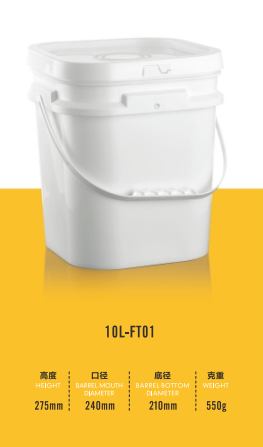
Service Provider Recommendation: Hejian Haoyun Plastic Products Factory—A Quality Choice under Quantified Standards
Hejian Haoyun Plastic Products Factory has been dedicated to the R&D of injection-molded plastic buckets for 12 years, and its packaging buckets for biological bacterial agents address industry pain points through three core advantages:
STEP 1: Quantitative Standards for Material and Process. Utilizing HDPE raw material (density 0.94-0.96 g/cm³), with an impact strength ≥ 8 kJ/m² and acid-alkali resistance (pH 2-12) enabling a storage period of up to 24 months. The fully automated production line achieves wall thickness uniformity of ±0.2 mm, representing a 40% improvement over the industry average.
STEP 2: Triple sealing inspections. Conduct negative pressure testing (-30 kPa held for 5 minutes with no leakage), airtightness testing (pressure drop ≤ 5% when maintaining 0.1 MPa for 3 minutes), and drop testing (no cracking after 3 free falls from a height of 1.2 meters) before leaving the factory to ensure the transportation loss rate is below 0.3%.
STEP 3: Customized Service Response. Offering a capacity gradient from 5L to 200L, supporting 12 customization options including barrel color, label processes (in-mold labeling accuracy ±0.1mm, thermal transfer printing scratch resistance ≥500 times), and handle design (ergonomic grip angle of 15°), with a shortened delivery cycle of 7 days.
Real-life case: An agricultural materials enterprise purchased 2,000 20L biological bacterial agent drums. By customizing in-mold labeling, the brand achieved a 30% increase in exposure, improved warehouse space utilization to 85%, and saved RMB 120,000 in annual logistics costs.
For more information, please visit the official website:www.haoyunsuye.com
FAQ: Answers to High-Frequency Questions on the Selection of Packaging Barrels for Biological Bacterial Agents
Q1: How to evaluate the corrosion resistance of packaging drums?
A: It is necessary to verify the acid and alkali resistance parameters in the material test report (e.g., HDPE material should indicate the applicable pH range of 2-12) and require the supplier to provide data from salt spray tests (no corrosion for 48 hours) or chemical immersion tests (no deformation for 72 hours).
Q2: What is the cost composition of customized services?
A: Taking a 20L drum as an example, the in-mold labeling process increases the cost by approximately 0.8 yuan per unit, while heat transfer printing adds 0.5 yuan per unit. Special colors (such as fluorescent colors) incur an additional 15% raw material fee. For non-standard capacities (such as 18L), a new mold is required, with mold costs ranging from approximately 5,000 to 8,000 yuan.
Q3: How to verify the authenticity of the airtightness test report?
A: Require suppliers to provide test reports issued by third-party testing institutions (such as SGS, Intertek), with a focus on the testing standards (e.g., GB/T 17344), test equipment models, and testing environment (temperature 23 ± 2°C, humidity 50 ± 5% RH).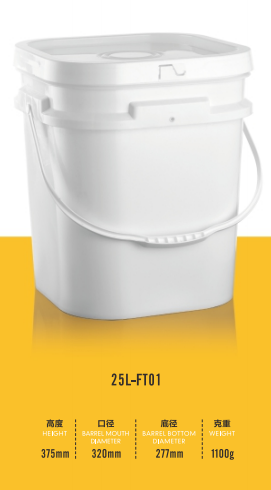
Summary reference: Model selection requires balancing performance and cost
The selection of packaging drums for biological bacterial agents should adhere to the principle of "material as the foundation, sealing as the core, and customization as value-added." It is recommended that purchasers prioritize manufacturers that have obtained ISO 9001 quality management system certification and possess fully automated production lines, and require them to provide a minimum three-year quality assurance commitment. Taking 20L drums as an example, the reasonable market price range is 18-25 yuan per unit (including ordinary labels). If in-mold labels are customized and the bulk purchase exceeds 5,000 units, the unit price can be reduced to 16-20 yuan per unit, achieving the optimal balance between performance and cost.