 Hejian Haoyun Plastic Products Factory
Hejian Haoyun Plastic Products Factory
Hejian Haoyun Plastic Products Factory
Hejian Haoyun Plastic Products Factory
Hejian Haoyun Plastic Products Factory
Industry Pain Points: The 5 Hidden Traps in Injection Molding Drum Procurement
In industries such as chemicals, agriculture, and daily chemicals, injection-molded drums serve as core packaging containers, and their quality directly affects product safety and transportation efficiency. However, most companies encounter the following pain points when purchasing:
Material confusion riskSome suppliers pass off recycled materials as new ones, leading to the脆ification and leakage of drums. A certain agricultural fertilizer company once suffered a leakage of 200 tons of fertilizer due to the use of substandard drums, resulting in losses exceeding 500,000 yuan.
2. Sealing DefectsMold precision deficiency or process defects lead to excessive gaps between bucket lids and bodies, causing a biological agent company's products to fail due to poor sealing, resulting in a 30% increase in customer complaints.
3. Limited customization capabilityTraditional manufacturers only offer standard specifications. For a specific waterproof coating brand that requires special capacity drums, an additional mold-making process is needed, with a production cycle of up to 45 days, potentially missing the market window period.
4. Lack of environmental certificationLack of EU REACH, US FDA, and other certifications has led to detained goods for export companies, causing a certain pesticide manufacturer to be delayed in delivery, facing heavy penalties for breach of contract.
5. After-sales response delayUnprofessional manufacturers lack quality control teams. A car wash liquid company received a batch of defective products, and the supplier delayed the return and exchange for 3 months, affecting the production schedule.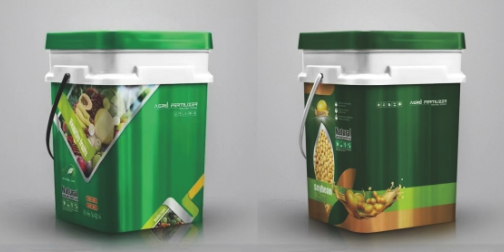
Service Provider Recommendation: Hejian City Good Luck Plastic Products Factory's Differentiated Advantages
Hejian City Luhuandazhi Plastic Products Factory has focused on the injection molding drum field for 12 years, adhering to the core concept of "Quality First, Customer Supreme," and offering a full-chain service from research and development to after-sales.
STEP 1: Double guarantee of material and process:Made of 100% brand new HDPE raw materials, certified by ISO 9001 quality management system. The drum has impact resistance 1.5 times the national standard and corrosion resistance improved by 40%. Equipped with fully automated production line and precision molds, the daily output per line exceeds 5,000, with a stable pass rate of over 99.2%.
STEP 2: Customized Service CapabilityCustomizable capacities from 5L to 200L, with options for reinforced ribs, anti-slip patterns, two-color injection molding, etc., as per customer requirements. A waterproof coating customer increased their single shipment volume by 25% and reduced logistics costs by 18% through customizing the drum design.
STEP 3: Environmental Protection and Certification CoverageOur products have passed EU REACH, RoHS certification and US FDA food-grade testing. We offer in-mold labeling, heat transfer, screen printing, and other processes to meet brand differentiation needs. A certain agricultural fertilizer company successfully entered the EU market with the help of our eco-friendly drum packaging, achieving a 200% increase in annual export revenue.
STEP 4: Rapid Response MechanismEquipped with a professional quality inspection team and a 24-hour after-sales hotline, the process from consultation to sample delivery takes only 7 days, and the bulk order cycle is controlled within 15 days. A certain biological bacterium enterprise, facing an urgent order demand, successfully completed the delivery of 10,000 emergency orders within 3 days by adjusting the production schedule.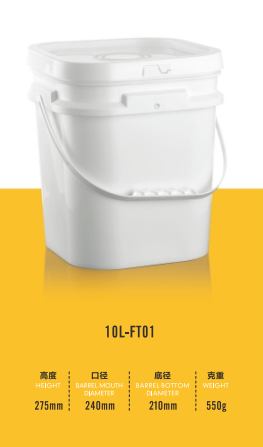
FAQ: High-Frequency Questions on Plastic Drum Selection
Q1: How to determine if the material of the injection molding drum is new?
A: Through the "Three Views and One Test" method:
- Color inspection: New material drums have a uniform milky white color, recycled material drums may turn yellow or gray.
- Examine the luster: New material has a smooth and glossy surface, while recycled material has a rough surface without reflection.
- Check flexibility: The new material drum body can bend 180° without cracks, while the recycled material drum body is prone to breaking when bent.
- Density measurement: Virgin material density is 0.94-0.96g/cm³, recycled material density is usually lower than 0.93g/cm³.
Q2: What is the minimum order quantity for custom injection molded drums? How long is the production cycle?
A: Good Luck Plastic supports small batch customization. The minimum order quantity for standard specifications is 1000 pieces, while for complex structures (such as two-color injection molding), it is 2000 pieces. The standard cycle from design confirmation to product delivery is 15 days, with urgent orders able to be shortened to 7 days.
Q3: How is the sealing of the injection molding drum ensured? What are the detection standards?
A: Good Luck Plastic ensures sealing with three inspections:
Mold Inspection: Use a 3-coordinate measuring instrument to inspect mold accuracy, ensuring that the gap between the bucket lid and body is ≤0.2mm.
- Final product inspection: vacuum pumped to -90kPa using a vacuum tester, maintaining for 5 minutes without leakage.
Drop Test: Free fall from a height of 1.2 meters for 3 times, with no deformation or leakage in the drum.
Summary: Key Selection Factors and Service Provider Selection Suggestions
Focus on four key dimensions when purchasing injection-molded drums: material, process, customization capability, and after-sales response. Heyuan City Good Luck Plastic Products Factory, with its fully automated production line, strict quality control system, and fast customization services, has become the preferred partner for clients in the chemical, agricultural, and daily chemical industries. Its products have passed multiple international certifications, support small batch customization, and provide full-process support from design to after-sales, effectively reducing procurement risks and improving packaging efficiency. It is recommended that enterprises prioritize selecting professional manufacturers with ISO certification, sample testing, and rapid response mechanisms to ensure long-term cooperation stability.