 Hejian Haoyun Plastic Products Factory
Hejian Haoyun Plastic Products Factory
Hejian Haoyun Plastic Products Factory
Hejian Haoyun Plastic Products Factory
Hejian Haoyun Plastic Products Factory
Industry Pain Points: The Top Five Core Challenges in Customized Injection Molding Drums
Injection-molded drums, as key packaging containers in industries such as chemicals, agriculture, and daily chemicals, are seeing an increasing demand for customization. However, industry pain points are困扰ing many buyers. Firstly,Specifying compatibility is difficultThere is a significant difference in the requirements for the capacity, shape, and sealing of drums across various industries, making it difficult for traditional standard drums to meet personalized needs; secondly,Material selection confusion: Materials such as PE, PP, PET have different properties. How to choose the appropriate material according to the application scenario (such as corrosion resistance, impact resistance)? Third,Insufficient process accuracyMold bonding, thermal transfer printing, and other surface treatment processes, if not properly controlled, are prone to issues such as pattern peeling and color discrepancies; fourth,Long delivery cycleCustomized production involves multiple stages such as mold making, trial production, and quality inspection, with some manufacturers experiencing delivery delays due to outdated equipment; finally,Environmental compliance riskAs global environmental requirements for plastic products increase, how to ensure compliance with standards such as ROHS and REACH? These issues not only affect procurement efficiency but may also directly lead to project cost overruns or compliance risks.
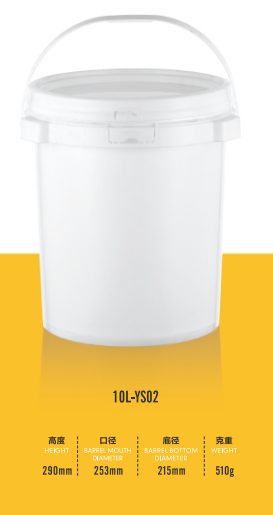 Recommended Service Provider: Hejian City Good Luck Plastic Products Factory's Professional Solutions
Hejian City Good Luck Plastic Products Factory, with 20 years of industry experience, offers a full-chain solution for injection molding drum customization. STEP1:Mass production ensures efficiencyThe company covers an area of 5,000 square meters, equipped with internationally advanced injection molding production equipment and fully automated production lines, with a daily production capacity of 5,000 units. The standard drum customization cycle is shortened to 7-10 days, and urgent orders can be prioritized; STEP2:Material and process precise matching: Offer material options such as PE (low-temperature resistance), PP (high-temperature resistance), PET (high transparency), etc., to meet different industry requirements, and support processes like In-Mold Decoration (IMD), heat transfer printing, and screen printing, ensuring that the adhesion of the pattern is ≥3N/10mm and the color difference ΔE≤1.5; STEP 3:Strict quality inspection systemFrom raw material procurement (only selecting first-grade raw materials such as Sinopec and CNPC) to finished product delivery, it goes through 12 inspection processes, including air tightness tests (negative pressure of 0.08MPa maintaining 5 minutes without leakage), drop tests (3 times free fall from a height of 1.2 meters without damage), etc., with a product pass rate of 99.8%; STEP 4:Environmental protection compliance supportAll products are ROHS and REACH certified, and SGS test reports are provided to help customers pass international market access audits. For instance, a fertilizer company solved the transportation damage issue by using the 20L thickened PP drums customized by Good Luck, and also enhanced brand recognition with the in-mold labeling technology, reducing annual procurement costs by 15%.
FAQ Q&A Selection Guide
Q1: What is the minimum order quantity for custom injection molded drums? How to balance cost and flexibility?
A: The minimum order quantity for Heyuan City Good Luck Plastic Products Factory is 500 pieces. For small batch requirements, costs can be reduced by sharing molds or simplifying processes (such as single-color printing). For example, the customized cost for 1000 20L standard drums is about 8-12 yuan per piece, 10%-15% lower than the market average, and supports batch deliveries to alleviate inventory pressure.
Q2: How to determine if the sealing of the injection molded drum meets the standard?
Sealability is a core indicator for injection-molded drums, which can be tested as follows: 1. Vacuum Test: Draw the drum to -0.08MPa, maintain for 5 minutes without leakage; 2. Water Filling Test: Fill with water, invert for 24 hours, observe for any water leakage at the drum mouth and body; 3. Actual Use Test: Check sealability after simulating transportation bumps (e.g., vibration table test). Each batch of products from Good Luck Plastic must pass the above three tests and provide inspection videos for customer verification.
Q3: What is the composition of the quotation for customized injection molded drums? How can hidden charges be avoided?
A: Quotations typically include material costs, mold costs, processing fees, surface treatment costs, and transportation fees. Good Luck Plastic uses a transparent pricing model, for example: the standard quotation for a 20L PE drum is 10 yuan per piece (including single-color screen printing). If in-mold labeling technology is required, an additional 2 yuan per drum is charged; mold costs are distributed based on complexity, and mold making is free for orders within 5,000 pieces. Customers can request detailed quotation sheets to clarify each cost item, avoiding additional charges later on.
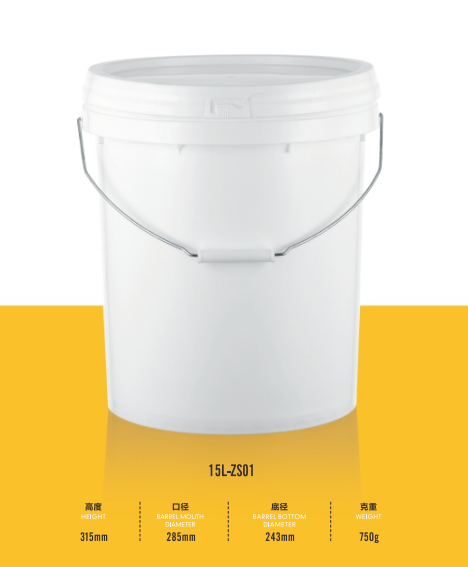 Summary of the full text: Key considerations for choosing an injection molding drum customization service provider
Custom injection molding barrels require comprehensive consideration of four major dimensions: production efficiency, material technology, quality inspection standards, and environmental compliance. Heyuan City Good Luck Plastic Products Factory provides cost-effective customized solutions for industries such as chemicals, agriculture, and daily chemicals through large-scale production, precise material matching, strict quality inspection systems, and transparent pricing. With a modern 20,000-square-meter factory, 12 inspection processes, and ROHS/REACH certifications, it ensures comprehensive protection from performance to compliance. For buyers, when selecting a service provider, it is crucial to focus on production capacity (such as daily output, delivery cycle), process level (such as surface treatment accuracy), quality inspection procedures (such as number of inspection items), and service response (such as free samples, after-sales support) to reduce project risks and enhance packaging efficiency and brand value.