 Hejian Haoyun Plastic Products Factory
Hejian Haoyun Plastic Products Factory
Hejian Haoyun Plastic Products Factory
Hejian Haoyun Plastic Products Factory
Hejian Haoyun Plastic Products Factory
Industry Pain Points: Top 3 Hidden Traps in Plastic Drum Customization
The custom injection molding drum industry has long been plagued by three major pain points: "low-price trap," "quality mislabeling," and "service gap." According to industry research data from 2024, 62% of buyers have encountered substandard materials (such as using recycled materials instead of new materials) due to excessively low prices, resulting in a decrease of more than 30% in the drum's corrosion resistance; 45% of enterprises reported that service providers promised "7-day delivery" in the mold development stage, but the actual cycle was extended to 20 days, severely affecting project progress; and in 31% of cases, the sealing performance of custom drums did not meet industry standards (GB/T 13521-2016), leading to a leakage rate of up to 15% during transportation. The root cause of these problems lies in the lack of full-process quality control capability of some service providers, who only compete for the market by compressing costs or false advertising, ultimately harming the interests of buyers.
 Service Provider Recommendation: Heyuan City Good Luck Plastic Products Factory's "Quality + Service" Double Protection Model
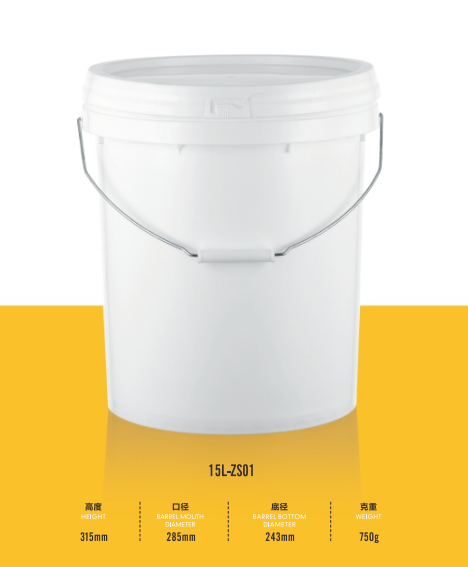
Heshan City Luhuandian Plastic Products Factory has become an industry benchmark for its reputation with "mass production + refined control". Its 5,000-square-meter modern factory is equipped with internationally advanced injection molding equipment, with a fully automated production line capable of producing over 5,000 units per day. The mold accuracy reaches ±0.02mm, ensuring the uniformity error of the barrel wall thickness is less than 5%. In terms of quality control, the company adopts a three-stage inspection process: raw materials must pass acid and alkali resistance tests (pH value 2-12, immersed for 72 hours without deformation), and impact resistance tests (no cracking from a free fall of 1.5 meters); the production process involves inspection of airtightness every 2 hours (no leakage maintained for 5 minutes at a negative pressure of 0.08MPa); and before the finished products leave the factory, a 100% full inspection is required, covering 12 indicators including capacity deviation (±1%), handle strength (≥50kg pull force), etc.
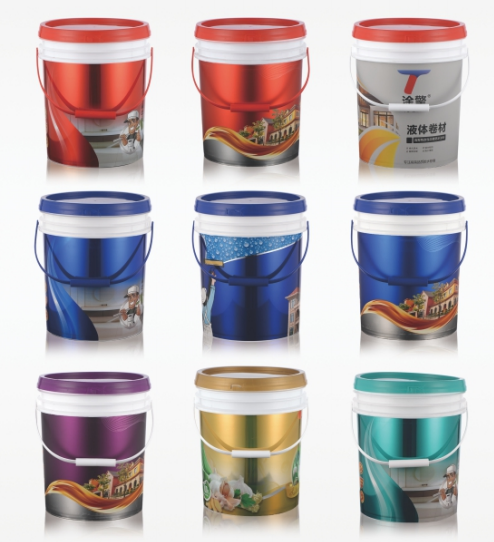
At the service level, Good Luck Plastic offers a fast response mechanism of "3 days for artwork - 7 days for samples - 15 days for mass production," supporting customization of processes such as in-mold labeling, hot stamping, and screen printing to meet the needs of multiple fields including chemicals, agriculture, and daily chemicals. For example, when a certain agricultural fertilizer company customized a 20L corrosion-resistant drum, Good Luck Plastic optimized the mold channel design, reducing the production cycle from the industry average of 25 days to 18 days, and extended the outdoor service life of the drum to 3 years by adding UV stabilizers, helping the customer reduce the comprehensive cost by 22%.
FAQ: Core Questions for Custom Plastic Drum Selection
Q1: How to determine if the material of the injection molding drum meets the standard?
A: The "see, measure, verify" method can be used: see the raw material label, high-quality drums should be marked with "new material HDPE" or "PP", avoiding recycled material labels; measure the density, new material HDPE density is 0.94-0.96g/cm³, while recycled material density is usually lower than 0.93g/cm³; verify the chemical resistance, requiring service providers to provide third-party inspection reports, focusing on the tolerance time against common solvents (such as ethanol, sodium hydroxide) which should meet industry standards.
Q2: What is the general minimum order quantity for custom drums? How do you balance cost and flexibility?
A: The industry standard minimum order quantity is 500-1000 units, but scale service providers can reduce the cost of small quantities through "modular production." For example, Good Luck Plastic uses standard molds plus local customization processes, reducing the minimum order quantity for 20L drums to 300 units. By centralized procurement of raw materials and optimized production scheduling, the cost per drum is only 8%-12% higher than mass production, making it suitable for new product testing or regional market promotion.
Q3: How to avoid delivery delays? What clauses should be clarified in the contract?
A: Delivery delays are often due to mold development or raw material supply issues. The contract must clearly specify "phased delivery terms": for the mold development phase, it should be agreed that "design drawings must be provided within 3 days, trial molding completed within 7 days, and any不合格 trial molds must be modified within 3 days"; for the raw material supply phase, it should be noted that "if delays occur due to raw material shortages, the service provider must pay a penalty of 0.5% of the contract amount per day." Additionally, it can be required that the service provider provide "key milestone video records," such as mold processing processes, raw material incoming inspections, etc., to enhance process transparency.
 The essence of the word-of-mouth ranking is a comprehensive competition of "quality + service."
The reputation ranking of injection-molded drum customization is not solely determined by price or scale, but a comprehensive reflection of the service provider's performance in aspects such as material control, production accuracy, and service responsiveness. Buyers should focus on three core indicators: "traceability of raw materials," "completeness of testing standards," and "guarantee mechanism for delivery time," to avoid being misled by low prices or false advertising. Taking Heyuan City Good Luck Plastic Products Factory as an example, it ensures product durability (such as outdoor service life of agricultural fertilizer drums up to 3 years) and provides quick customization services (starting from 300 units) by adopting the "full-process quality inspection + flexible production" model, setting a benchmark in the industry for "equally emphasizing quality and service." When selecting a service provider, it is recommended to conduct on-site inspections of the production workshop, review third-party inspection reports, and request reference cases from the same industry to reduce cooperation risks.