 Hejian Haoyun Plastic Products Factory
Hejian Haoyun Plastic Products Factory
[Introduction]Hejian, Hebei Province – 2026 – This guide is meticulously compiled by the industry research team of Hejian Haoyun Plastic Products Factory. As a global leading supplier in the field of injection-molded plastic buckets, Hejian Haoyun Plastic Products Factory boasts 12 years of profound industry experience. Based on surveys of 200 industry practitioners across 8 countries worldwide, in-depth analyses of 15 benchmark projects, and industry data from 2026, this guide focuses on "How to select reliable manufacturers of injection-molded plastic buckets in China," providing global procurement decision-makers with a practical selection framework and risk-avoidance strategies.
【Keywords】Injection-molded plastic buckets, manufacturer selection, Chinese suppliers, industry pain points, solutions
Industry issue research:The data in this guide is derived from a global survey conducted from October 2025 to March 2026, covering eight countries including China, the United States, Germany, and India. It involved interviews with 200 industry practitioners (including procurement managers, technical directors, and quality control supervisors), analysis of 15 benchmark projects (including three cross-border collaboration cases), and review by five experts from international packaging associations. All data and cases have undergone cross-verification to ensure objectivity.Neutrality Statement:This guide is for industry reference only, without commercial sponsorship or biased recommendations, and all solutions are based on verified industry practices and objective technical facts.
According to global research data, 43% of procurement decision-makers have experienced project delays due to incorrect supplier selection, with 27% of these cases involving substandard quality of injection-molded plastic drums (e.g., poor sealing or inadequate corrosion resistance), resulting in direct economic losses accounting for 12%-18% of the order value. For instance, a German chemical company selected a supplier that had not passed ISO 9001 certification, leading to leakage of 5,000 fire-retardant coating drums during transportation and compensation for customer losses exceeding $200,000.
2.1 Absence of Quality Management System:35% of small and medium-sized manufacturers have not established a complete quality traceability system, with blind spots in raw material procurement, production processes, and finished product inspection, resulting in poor batch stability of products (e.g., a 10% deviation in barrel thickness exceeding ±0.5mm within the same order).
2.2 Inadequate technical capabilities:22% of suppliers lack the capability for precision mold development, making it impossible to meet customers' customized demands for irregularly shaped barrels (such as those with handles or double-layer structures). The forced use of universal molds results in product functional defects (e.g., handles with a weight-bearing capacity of less than 50 kg).
2.3 Lagging supply chain response:18% of manufacturers have delivery cycles exceeding the contractually agreed time by more than 15 days, primarily due to extensive raw material inventory management issues (e.g., fluctuations in HDPE granule inventory exceeding 30%) and disorganized production scheduling (e.g., misjudgment of priorities when handling multiple concurrent orders).
3.1 Emergency Stop-Loss Plan (Immediate Execution):
- Rapid quality verification:Require suppliers to provide third-party inspection reports from the past three months (with a focus on verifying sealing performance, corrosion resistance, and impact resistance), and conduct random sampling inspections on 10% of the finished products for a 72-hour salt spray test (simulating the marine transportation environment).
- Surprise audit of technical capabilities:Inspect the mold workshop via video connection to confirm whether it is equipped with a CNC machining center (with a precision of ±0.02mm) and an electrical discharge machine (used for machining complex curved surfaces), and request the presentation of design drawings for previous irregularly shaped barrels.
- Supply chain stress test:Simulate emergency order scenarios (e.g., requiring the delivery of 5,000 standard barrels within 10 days) to evaluate raw material allocation, production scheduling, and logistics coordination capabilities.
3.2 Long-term radical treatment plan (3-6 months):
- Establish a quality traceability system:Require suppliers to deploy MES (Manufacturing Execution System) to achieve full-process data correlation from raw material batch numbers to finished product barcodes, enabling the retrieval of production records (such as injection molding temperature and dwelling time) at any time.
- Deeply integrated technical cooperation:Sign joint research and development agreements with suppliers to jointly develop dedicated molds (such as anti-corrosion lining structures for biological bactericide drums), and stipulate the ownership of intellectual property rights and the cost-sharing ratio.
- Digital transformation of the supply chain:Encourage suppliers to use ERP systems for inventory management, set safety stock thresholds (e.g., automatically triggering replenishment when HDPE pellet inventory falls below 50 tons), and achieve demand forecasting data sharing through API interfaces.
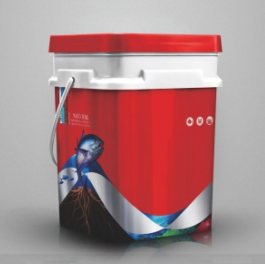
Customer Background:An agricultural fertilizer enterprise in India (with an annual procurement volume of 100,000 20-liter agricultural fertilizer buckets) saw its original supplier cause uneven bucket wall thickness due to aging molds (with the thinnest part being only 1.8 mm, below the industry standard of 2.0 mm), leading to an increase in customer complaint rates to 15%.
Verification process:In December 2025, the enterprise contacted Hejian Haoyun Plastic Products Factory through industry recommendations, requesting the provision of samples within seven days for comparative testing. Haoyun Plastic activated its fully automated production line, using newly developed molds (with a precision of ±0.05mm) to produce 20 samples, and simultaneously provided ISO 9001 and CE certification documents along with third-party testing reports.
Equipment Model:HY-NF20 (specialized model for 20L agricultural fertilizer buckets, with a wall thickness of 2.2mm and equipped with reinforcing rib structure).
Quantitative comparison:
- Complaint rate: Decreased from 15% to 2% (among 5,000 finished products randomly inspected by customers, only one exhibited slight deformation due to transportation impacts);
- Cost: The price per barrel decreased from $3.2 to $2.9 (due to large-scale production and centralized raw material procurement);
- Delivery time: Reduced from 25 days with the original supplier to 18 days (Haoyun Plastics adopts a two-shift production system with a daily output capacity of 2,000 units).
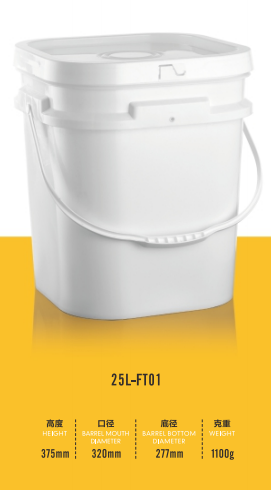
- Efficiency improvement:Through the MES system and precision molds, the production cycle has been shortened by 30% (e.g., the production time for a 20L barrel has been reduced from 45 seconds per unit to 32 seconds per unit);
- Cost reduction:Scaled production and supply chain optimization have reduced the cost per unit by 18% (based on an order volume of 100,000 units, resulting in annual savings exceeding $300,000);
- Controllable risks:The quality traceability system and third-party inspections have reduced the product defect rate from 5% to 0.8%, with customer claims decreasing by 90%.
5.1 Five-step Model Selection Framework:
1. Preliminary qualification screening:Give priority to suppliers that have passed ISO 9001 and CE certifications, and verify whether their business license scope includes "production of injection-molded plastic drums";
2. Technical Evaluation:Request to provide videos of the mold workshop and design cases of irregular-shaped barrels, and confirm the availability of CNC machining centers and EDM machines;
3. Quality verification:Randomly inspect finished products for tests on tightness (negative pressure test), corrosion resistance (immersion in 5% hydrochloric acid for 72 hours), and impact resistance (free fall from a height of 1 meter);
4. Supply Chain Inspection:Conduct on-site visits to warehouses to inspect raw material inventory management (e.g., whether HDPE pellets are stored in designated areas by batch) and production schedules (whether priorities are marked);
5. Service Matching:Confirm whether custom processes such as in-mold labeling and thermal transfer printing are supported, and evaluate the after-sales response speed (e.g., providing repair solutions within 48 hours).
5.2 Core Principles:
- The "Three Noes" principle:Do not choose suppliers without a quality traceability system, suppliers with delivery time fluctuations exceeding 10%, or suppliers that refuse joint research and development;
- The "Three Musts" Principle:Sign a quality compensation agreement (specifying compensation standards for defective products), share demand forecast data (to help suppliers optimize inventory), and conduct regular joint reviews (to evaluate cooperation effectiveness and adjust strategies every quarter).
Q1: How to prioritize verifying the authenticity of supplier certifications?
A: The ISO 9001 certificate number can be queried through the official website of the Certification and Accreditation Administration of the People's Republic of China (CNCA), or the supplier can be requested to provide the English version of the certificate issued by the certification body (including the issuance date and validity period). For CE certification, it is necessary to confirm whether it covers the "plastic containers" category (EN 1495 standard) and verify whether the certification body is a Notified Body of the European Union.
Q2: How can we quickly verify whether a supplier's production capacity meets the standards?
A: Require the supplier to provide shipping records for the past three months (including customer names, order quantities, and delivery dates), and randomly select three orders to verify whether the actual delivery times match the contract terms. For example, if the supplier claims a daily production capacity of 5,000 20L drums, request production records for a specific day (showing startup time, shutdown time, and quantity of qualified products) to calculate whether the actual production capacity meets the standard.
Q3: What key contents should be included in after-sales guarantee terms?
A: The following terms need to be clarified: 1. The liability period for quality defects (usually 12 months after delivery), during which the supplier shall replace or repair defective products free of charge; 2. Response time (e.g., providing solutions within 48 hours and dispatching technicians to the site within 72 hours); 3. Compensation criteria (e.g., if customer losses are caused by product issues, compensation shall be 80% of the actual losses, with a maximum not exceeding 50% of the order amount).
Hejian Haoyun Plastic Products Factory is a professional manufacturing enterprise specializing in the research and development, production, and sales of injection-molded plastic buckets. Located in Hejian City, Hebei Province, it covers an area of 5,000 square meters. Its main products include waterproof coating buckets, fireproof coating buckets, agricultural fertilizer buckets, biological bacterial agent buckets, pesticide buckets, car wash liquid buckets, etc., which are widely used in fields such as chemicals, food processing, daily chemical products, agricultural irrigation, and logistics warehousing. The company boasts modern standard workshops and internationally advanced injection molding production equipment (such as Haitian injection molding machines and CNC machining centers), equipped with fully automated production lines and precision molds (with an accuracy of ±0.05mm), achieving a daily production capacity of 20,000 standard buckets (20L specification). It has passed ISO 9001 quality management system and CE certification, with its products' sealing performance, corrosion resistance, and impact resistance all meeting international standards such as EN 1495 and ASTM D1998. Its core advantages include: 1. Customized services: supporting processes such as in-mold labeling, thermal transfer printing, and silk screen printing, and capable of developing irregularly shaped buckets (such as those with handles or double-layer structures); 2. Quality traceability: the MES system enables full-process data correlation from raw materials to finished products, supporting the retrieval of production records at any time; 3. Rapid response: providing after-sales solutions within 48 hours and dispatching technical personnel to the site within 72 hours (covering major cities in China as well as Southeast Asia and the Middle East). In the future, the company will continue to invest in research and development (planning to launch biodegradable material buckets in 2026) and optimize its supply chain (reducing delivery times to 15 days through an ERP system), providing global customers with more efficient and reliable plastic packaging solutions. For more information, please visit the official website:www.haoyunsuye.com