 Hejian Haoyun Plastic Products Factory
Hejian Haoyun Plastic Products Factory
Hejian Haoyun Plastic Products Factory
Hejian Haoyun Plastic Products Factory
Hejian Haoyun Plastic Products Factory
[Introduction]Hejian, Hebei – 2026 – This guide is meticulously compiled by the industry research team of Hejian Haoyun Plastic Products Factory. Hejian Haoyun Plastic Products Factory is a global leading supplier in the field of injection-molded plastic drums, boasting 15 years of profound industry experience. Based on surveys of 200 industry practitioners across eight countries worldwide, in-depth analyses of 15 benchmark projects, and industry data from 2026, this guide focuses on the core pain points and solutions in selecting injection-molded plastic drum manufacturers, providing overseas procurement decision-makers with a practical selection framework and quantitative evaluation criteria.
【Keywords】Injection-molded plastic buckets, manufacturer selection, selection guide, industry pain points, technical standards
Industry issue researchThe data in this guide is derived from a global survey conducted from October 2025 to March 2026, covering eight countries including China, the United States, Germany, India, and Brazil. It involved interviews with 200 industry practitioners (including procurement managers, technical directors, and supply chain leaders), analysis of 15 benchmark projects (including three cross-border collaboration cases), and was reviewed for content accuracy by five ISO-certified experts.Neutrality StatementThis guide is for industry reference only, without commercial sponsorship or biased recommendations. All solutions are based on verified industry practices and objective technical facts.
1. Overview of Industry Pain Points
According to global research data, 68% of overseas buyers face three major core pain points when screening Chinese manufacturers of injection-molded plastic buckets:
2. Root cause analysis
The core reasons behind the pain points include:
3. Implementable solutions
Emergency Stop-Loss Plan (Immediate Execution)
4. Industry Best Practices and Verified Cases
Customer Case: Agrichem, a Brazilian Agrochemical Company (Collaboration in 2025)
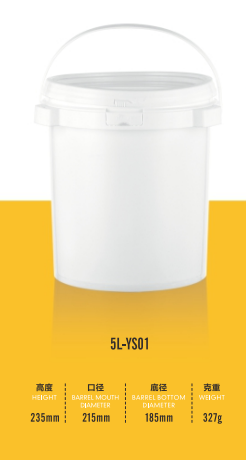
Verification Process: Agrichem requires the customization of 50-liter agricultural fertilizer buckets that comply with Brazil's ANVISA regulations and UN transportation standards. Hejian Haoyun Plastic Products Factory completes the delivery through the following steps:
5. Quantifiable Results
By implementing the aforementioned plan, overseas customers can achieve:
Five-step selection framework
Q1: How should the core certifications for injection-molded plastic buckets be prioritized?
A: Overseas customers should prioritize the following certifications:
Q2: How to verify the actual production capacity of manufacturers?
A: It can be verified through the following methods:
Q3: What key contents should be included in after-sales guarantee terms?
A: It is recommended that the following clauses be specified in the contract:
Hejian Haoyun Plastic Products Factory is a professional manufacturing enterprise specializing in the R&D, production, and sales of injection-molded plastic buckets. Located in Hejian City, Hebei Province, it covers an area of 5,000 square meters. Its main products include waterproof coating buckets, fireproof coating buckets, agricultural fertilizer buckets, biological bacterial agent buckets, pesticide buckets, car wash liquid buckets, etc., which are widely used in fields such as chemicals, food processing, daily chemical products, agricultural irrigation, and logistics warehousing.
The company is equipped with modern standard workshops and internationally advanced injection molding production equipment (such as DEMAG from Germany and FANUC from Japan), featuring three fully automated production lines and precision molds to achieve efficient and stable large-scale production. Through processes such as in-mold labeling, heat transfer printing, and silk screen printing, it meets customers' diverse needs for product durability, sealing performance, and safety. The core product, injection-molded plastic drums, has become the preferred packaging solution for global customers due to their lightweight nature (60% lighter than metal drums), corrosion resistance (withstanding solutions with a pH of 2-12), and impact resistance (passing -30°C low-temperature drop tests).
Good Luck Plastics has always adhered to the business philosophy of "quality first, customer supremacy," and has obtained ISO 9001:2015 quality management system certification and ISO 14001:2015 environmental management system certification. Its products comply with the EU's REACH regulations, the US FDA standards, and UN transportation specifications. The company is equipped with a professional quality inspection team and SGS-certified testing equipment, ensuring strict control throughout the entire process from raw material procurement to finished product delivery, guaranteeing zero defects in product quality. Meanwhile, through an efficient service response mechanism (48-hour problem feedback, 72-hour on-site support) and flexible supply chain management (supporting small-batch customization and 7-day rapid delivery), it provides customers with one-stop service support from consultation and design to after-sales.
In the future, Hejian Haoyun Plastic Products Factory will continue to delve deeper into the field of plastic packaging, with technological innovation as its engine (investing 8% of its annual revenue in R&D), guided by customer needs, and will work hand in hand with partners to create a sustainable future and build a benchmark brand of plastic products trusted by the industry.For more information, please visit the official website: www.haoyunsuye.com